

The 12 Best Strategy Board Games (Ranked Easiest to Hardest to Learn)
Most lists of the best strategy board games are ranked for people who already own forty of them. That’s no help if you’re trying to work out whether your group is ready for Scythe or should start with Catan.
So this list is ranked by learning curve. Number 1 is the easiest strategy game we rate and number 12 is the hardest, using the Bamboo score from our own reviews, which measures how easy a game is to learn. The Pandas score next to it is how much fun it is once you know it. Find the step your group is on and buy that one. Every game here is one we’ve reviewed, so a few well-known names we haven’t covered yet are missing, and lighter picks like Ticket to Ride and Carcassonne sit on our family list instead.
Some links below are Amazon affiliate links — as an Amazon Associate, King Panda Games earns from qualifying purchases at no extra cost to you. Full disclosure.
Exactly four of you? Our 4-player list picks strategy games that peak at that count. Just two? The 2-player list is the better fit. Last verified: October 2026.
1. 7 Wonders — The Easiest Real Strategy Game
7 Wonders is the easiest game on this list to learn, and the only one with a perfect 5/5 Bamboo. Each turn you pick one card from your hand, pass the rest to your neighbor, and do one of three things with the card you kept. Everyone plays at once.
The strategy is in reading the two players next to you, because they’re the only ones you trade with or fight. Our 7 Wonders review gives it 4/5 Pandas for exactly that reason, since you only ever face two neighbors. It seats 3–7, the box says 10+, and it plays in 30 minutes once everyone knows it. Repos Production publishes it, and our wonders tier list covers which board to hope for.
Learning curve — one round. By the second age nobody needs help.
Check 7 Wonders price on Amazon →
2. Splendor — Four Actions and a Quiet Race
Splendor has four possible actions and you take one per turn. You collect gem tokens, spend them on cards, and every card you buy makes later cards cheaper. The first player to 15 points triggers the end.
We’ve played it 7 or 8 times with friends from the neighborhood, and it’s the game we’d put in front of someone who says strategy games are too much. It scored 4/5 Bamboo and 4/5 Pandas in our Splendor review. It’s light on interaction. It seats 2–4, the box says 10+, and it runs about 30 minutes. Our Splendor strategy guide covers the opening.
Learning curve — one game.
Check Splendor price on Amazon →
3. Catan — Still the Best First Strategy Game
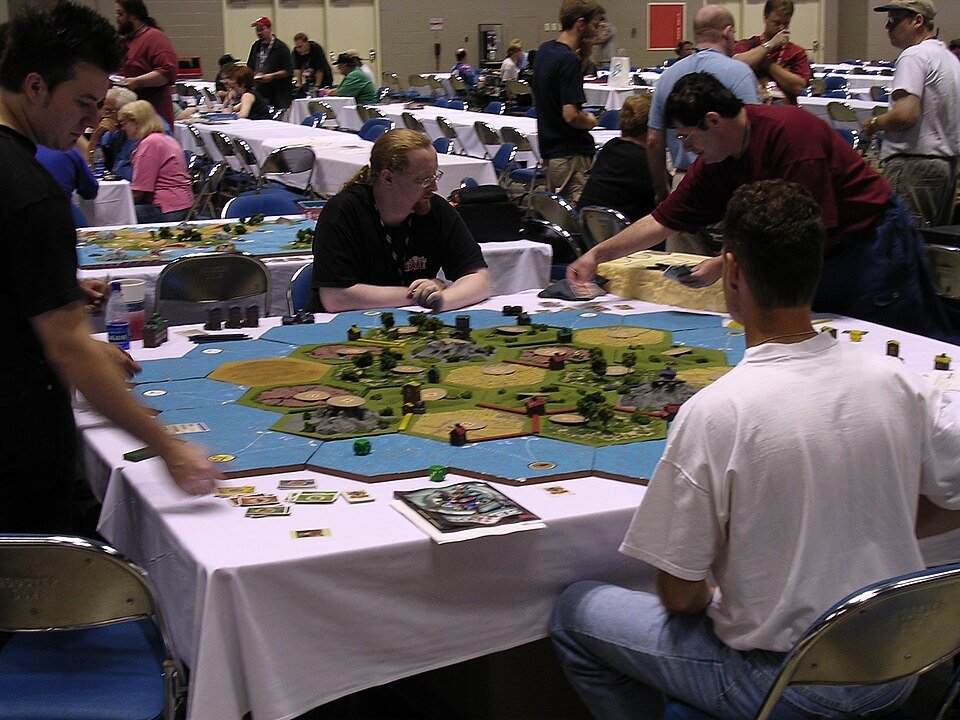
Catan is where most people meet strategy board games, and it still earns the job. You collect resources from the hexes your settlements touch, trade them across the table, and build toward ten points. The trading is the strategy. Every turn is a negotiation.
Our Catan review rates it 4/5 Bamboo and 4/5 Pandas, fun every time and occasionally infuriating when the dice ignore your numbers. It seats 3–4, the box says 10+, and it runs 60–120 minutes. Where you put your first two settlements decides a lot, so read our starting placement guide before your second game.
Learning curve — one session.
4. Dominion — The Deck-Builder That Started It
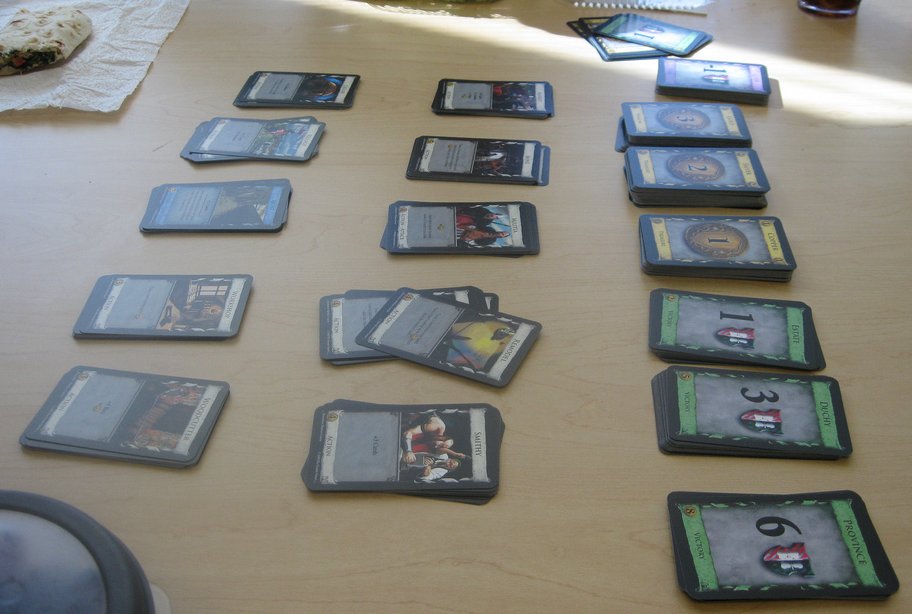
Dominion is the game that made deck-building a genre. Everyone starts with the same ten weak cards and buys better ones from a shared market, so the deck you draw from gets stronger as you play. Only ten kinds of card are on sale each game, drawn from a much larger set, and working out which combination wins is the whole puzzle.
We’re 40-plus plays in and still hitting setups that make us rethink our openings. It scored 4/5 Bamboo and 4/5 Pandas in our Dominion review. The turns teach fast, and reading ten new card texts is what slows the first game down. It seats 2–4 and plays in 30 minutes. Rio Grande Games publishes it, and our review puts it at 13+, though sharp 10-year-olds do fine.
Learning curve — one game for the turns, several for the cards.
Check Dominion price on Amazon →
5. 7 Wonders Duel — The Best Strategy Game for Two
7 Wonders Duel is for exactly two players, and it’s the best two-player strategy game under $50 we’ve reviewed. You take turns drafting cards from a shared layout, and there are three ways to win, by military, by science, or on points. You have to watch all three at once, because your opponent only needs one.
It scored 4/5 Bamboo and 5/5 Pandas in our 7 Wonders Duel review. The first game is rough if nobody has read the rulebook, and it clicks by game three. It plays in 30 minutes and the box says 10+. If you’re choosing between this and the original, our comparison sorts it by how many people you usually have.
Learning curve — three games.
Check 7 Wonders Duel price on Amazon →
6. Heat — Strategy for People Who Say They Hate Strategy
Heat is a racing game where your gear is your hand size. Fourth gear plays four cards and first gear plays one. Go too fast into a corner and you pay for it with heat cards that clog your deck.
It’s the best “my friend says they hate board games” game we own, and it has converted several people at our table who swore they had no interest in cars. Our Heat review gives it 4/5 Bamboo and 5/5 Pandas, and the last lap is the reason. It seats 1–6, the box says 10+, and it plays in 45–60 minutes. Our Heat strategy guide covers when to shift down.
Learning curve — about 15 minutes of teaching, then one race.
7. Wingspan — The Engine-Builder Everyone Recommends
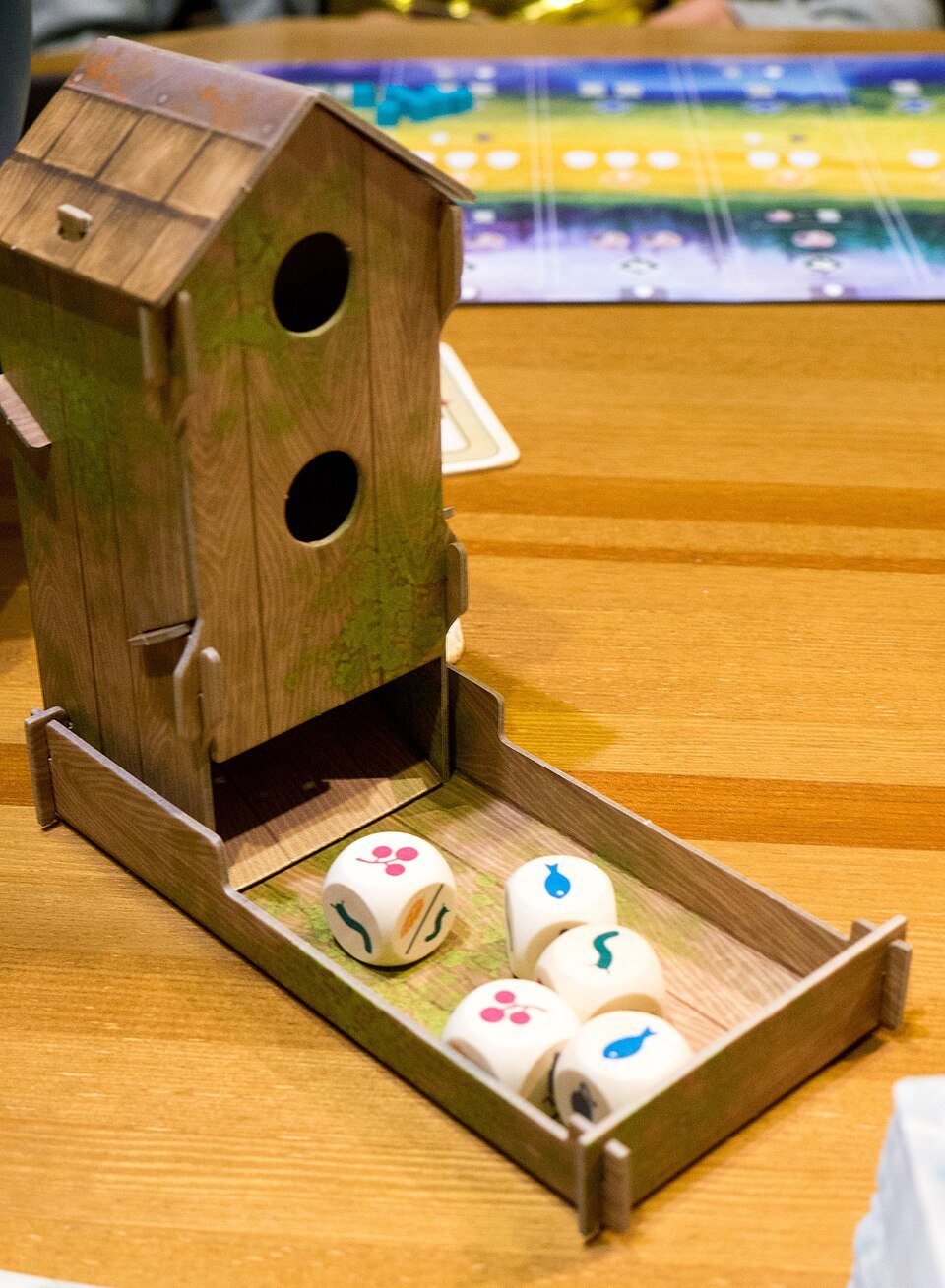
Wingspan is an engine-building game about birds. Each bird you play adds a power to one of three rows, and every time you use that row again, all its powers fire in order. Early turns do almost nothing. By the last round a single action sets off a chain.
That payoff is why it scored 5/5 Pandas in our Wingspan review. The 3/5 Bamboo is honest too. It takes two or three plays to click, and a first game can run past 90 minutes. After that it’s 40–70. It seats 1–5 and Stonemaier Games lists it at 10+. It’s calm and low on conflict. Our Wingspan strategy guide is the next step.
Learning curve — two or three plays.
Check Wingspan price on Amazon →
8. Everdell — Wingspan With More Teeth

Everdell is a worker-placement game where you build a city of up to fifteen cards. You send workers to gather resources, spend the resources on critters and buildings, and many of those cards let you play another one for free. Chaining those free plays is the game.
It scored 3/5 Bamboo and 5/5 Pandas in our Everdell review, and it takes a full game to see how the cards connect. It’s tighter than Wingspan, since other players can take the space or the card you needed. We ranked it the best-looking game we own in our board game artwork list. It seats 1–4, the box says 13+, and it plays in 40–80 minutes. See Everdell vs Wingspan if you’re choosing.
Learning curve — one full game.
Check Everdell price on Amazon →
9. Blood Rage — The One Where You Actually Fight
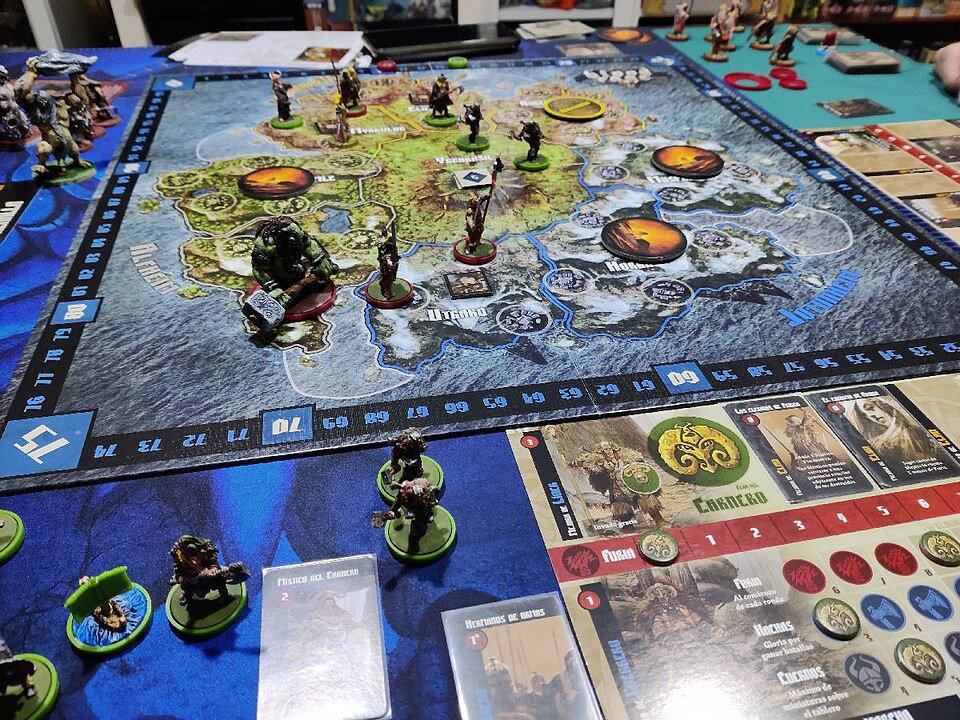
Blood Rage is the pick for groups who want a war. Each age you draft a hand of cards, then spend rage to put Viking warriors on the map and fight over provinces. Losing a battle can score you points too, so dying gloriously is a real strategy.
The rules are simple and the mindset takes a game, which is why our Blood Rage review gives it 3/5 Bamboo. The Pandas are 5/5. It’s vicious and dramatic every time. It seats 2–4 and is best with four, the box says 14+, and it runs 60–90 minutes. The draft decides most games, so our card drafting guide is the one to read first.
Learning curve — one game, mostly to stop playing it like Risk.
Check Blood Rage price on Amazon →
10. Scythe — The Full-Evening Engine Game
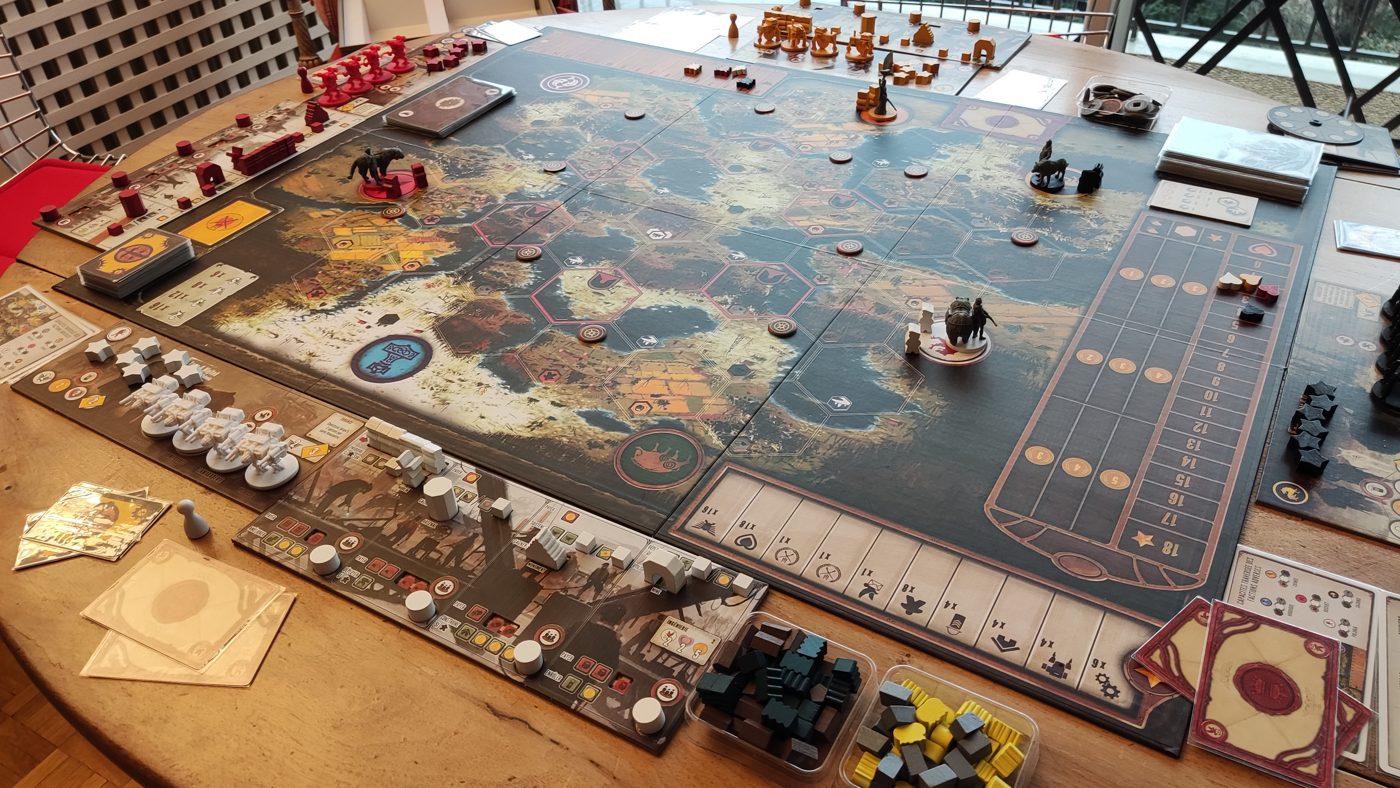
Scythe is the first game on this list that needs a whole evening. Each player runs a faction with its own abilities, building an economy of workers, mechs and upgrades on a shared map. Fights are rare and expensive. Most of the game is a race to place six stars, and popularity decides how much everything is worth when it ends.
That last part bites. In one of our plays, my wife triggered the end while I was two turns from cashing in a huge popularity swing, and it was worth exactly nothing. Our Scythe review gives it 2/5 Bamboo and 4/5 Pandas. Budget a full first night, and after that the turns are fast and tense. It seats 1–5, Stonemaier Games lists it at 14+, and it runs 90–115 minutes. New players should start with our Scythe for beginners guide.
Learning curve — a full first night.
Check Scythe price on Amazon →
11. Spirit Island — The Best Co-op Once It Clicks
Spirit Island is cooperative. You play spirits of an island defending it from colonists, and everyone wins or loses together. Each spirit plays completely differently, everyone plans at the same time, and the invaders follow rules you can see coming and still struggle to stop.
We’ve played it over thirty times across several groups and never the same way twice. Our Spirit Island review calls it the best co-op ever made once it clicks, 5/5 Pandas, and it gives it 2/5 Bamboo because the first night is rules-heavy and it takes two or three full games to feel in control. It seats 1–4, the box says 13+, and it runs 90–120 minutes. Pick your first spirit from our best spirits for beginners list.
Learning curve — two or three full games.
Check Spirit Island price on Amazon →
12. Root — Four Different Games on One Map
Root is the hardest game here to learn, because every faction has its own rulebook. One player runs an industrial empire, another a rigid bird dynasty, another a guerrilla uprising, and one plays a lone wanderer. They share a map and almost nothing else.
Nothing else produces an evening like it, which is the 5/5 Pandas in our Root review. The 2/5 Bamboo is the price. The first game is not the game, and it needs the same group to come back for a second and third. It seats 2–4 and is best at four, Leder Games lists it at 14+, and it runs 60–90 minutes once learned. Our factions ranking tells you who should play what.
Learning curve — three games with the same group.
Where to Start
If nobody at the table has played a modern strategy game, start with Catan or 7 Wonders. Catan if your group likes to talk and trade, 7 Wonders if there are five or more of you or you only have half an hour.
If you’ve worn those out, the middle of the list is the sweet spot. Wingspan and Everdell for groups that like building something, Heat for groups that like a race, and Blood Rage for groups that like a fight.
Buy Scythe, Spirit Island or Root only when you have the same three or four people coming back. All three are better on the third play than the first. For lighter nights, our best board games for adults list has the options, and the annual best board games list covers everything else we rate.
The Quick Picks Table
All twelve in learning order, with the two scores side by side.
| Game | Bamboo / Pandas | Players | Time | Learning curve | Review |
|---|---|---|---|---|---|
| 7 Wonders | 5 / 4 | 3–7 | 30 min | One round | 7 Wonders |
| Splendor | 4 / 4 | 2–4 | 30 min | One game | Splendor |
| Catan | 4 / 4 | 3–4 | 60–120 min | One session | Catan |
| Dominion | 4 / 4 | 2–4 | 30 min | One game, then the cards | Dominion |
| 7 Wonders Duel | 4 / 5 | 2 | 30 min | Three games | 7 Wonders Duel |
| Heat | 4 / 5 | 1–6 | 45–60 min | One race | Heat |
| Wingspan | 3 / 5 | 1–5 | 40–70 min | Two or three plays | Wingspan |
| Everdell | 3 / 5 | 1–4 | 40–80 min | One full game | Everdell |
| Blood Rage | 3 / 5 | 2–4 | 60–90 min | One game | Blood Rage |
| Scythe | 2 / 4 | 1–5 | 90–115 min | A full first night | Scythe |
| Spirit Island | 2 / 5 | 1–4 | 90–120 min | Two or three games | Spirit Island |
| Root | 2 / 5 | 2–4 | 60–90 min | Three games | Root |
Seven of the twelve earn 5/5 Pandas from us, and none of the seven is among the four easiest to learn. The best strategy board games ask more of you up front, and the right one to buy is the hardest one your group will actually finish learning.
Frequently Asked Questions
What is the best strategy board game for beginners?
Catan for a group that likes to talk, or 7 Wonders if you want something faster. Both are learned inside one session. Splendor is the pick if the group wants something quiet with almost no rules.
What is the best strategy board game for adults?
For a regular group willing to learn it, Spirit Island, Root and Blood Rage all earn 5 out of 5 Pandas from us. For adults who play a few times a year, Wingspan and Heat give most of the depth with far less teaching.
What is the best strategy board game for 2 players?
7 Wonders Duel. It is built for exactly two, plays in 30 minutes, and has three different ways to win. Dominion and Everdell are also at their best with two.
What are good strategy board games for families?
Catan, 7 Wonders, Splendor and Heat all carry a 10 and up age on the box and teach in one sitting. Wingspan works for patient kids of the same age. Scythe, Root and Blood Rage are 14 and up.
What is the hardest strategy board game to learn on this list?
Root. Each of its four factions has its own rules, so the table is learning four games at once. Scythe and Spirit Island share the same 2 out of 5 Bamboo score and each needs a full first night.
How long do strategy board games take to play?
From this list, 7 Wonders, Splendor, Dominion and 7 Wonders Duel run about 30 minutes. Heat, Wingspan and Everdell take around an hour. Blood Rage and Root run 60 to 90 minutes, and Scythe and Spirit Island need about two hours.