Bottom Line
Hues and Cues is best for families and mixed groups who want a party game anyone can learn in two minutes. Skip it if you want a game your group will ask for every week, because it wears thin quickly. Its biggest strength is how easy it is: give a one-word cue, put a cone on a color, score. Its biggest weakness is replayability; after the second or third game it loses a lot of its pull.
Hues and Cues gets 5/5 Bamboo Plants and 2/5 Pandas from us. It’s a fine game and really easy to learn, but we’ve played it about a dozen times, and after the second or third game it loses a lot of its pull.
The Bamboo is a 5 because there’s almost nothing to teach. You describe a color in one word, then two, and everyone guesses. The Pandas are a 2 because the fun is front-loaded. The first games are bright and surprising; by the fourth, the same board and the same kind of cues make it feel like you’ve seen it.
Some links below are Amazon affiliate links — as an Amazon Associate, King Panda Games earns from qualifying purchases at no extra cost to you. Full disclosure.
Check Hues and Cues price on Amazon →
Hues and Cues is a color-guessing party game where one player describes a hidden color in one or two words and everyone else tries to put a cone on that exact shade among 480 squares on the board.
| Detail | Info |
|---|---|
| Players | 3–10 |
| Best Player Count | 6 on the scoring maths — the cue giver can max out, and everyone still gets two turns |
| Age | 8+ |
| Play time | 30 min |
| Complexity | Light |
| Solo Mode | No |
| Designer | Scott Brady |
| Publisher | The Op (USAopoly) |
| Popular Upgrades | No |
| Bamboo Plants | 5/5 — teach it in two minutes |
| Pandas | 2/5 — fun at first, fades after a few games |
| Official site | The Op’s Hues and Cues page |
How Hues and Cues Works
Hues and Cues is one simple loop: one player gives cues, everyone else guesses, and the board scores itself. BoardGameGeek’s Hues and Cues page lists it as a 2020 party game for 3 to 10. The box holds a board of 480 colored squares, 100 color cards with four colors each, cones for up to ten players and a cardboard scoring frame, according to The Op’s official rules.
You’re the cue giver. You draw a card, pick one of its four colors, a dusty pink, and say one word: “Flamingo.” Going clockwise, each player puts one cone on the square they think you mean. Then you give a two-word cue, “faded flamingo,” and they place a second cone going the other way round the table. You drop the 3×3 scoring frame over your color, and everyone counts points.
The cue rules are the only tricky part. You can’t use a common color name like blue or orange, though abstract ones like lavender or chartreuse are fine. You can’t point at the board’s letters and numbers, and you can’t name an object in the room.
Scoring is generous. An exact hit is worth 3 points, a cone inside the frame is worth 2, and a cone touching the frame from outside is worth 1. The cue giver scores 1 point for every cone inside the frame, up to 9.
What We Liked
The teach is as short as party games get. Nearly everyone has argued about what “teal” means, so the idea lands instantly, and there are no cards to read or roles to hide. Designer Scott Brady got the idea from his years in printing, listening to customers say things like “I wanted it more blue,” he told Mojo Nation in an interview.
Nobody is ever really out of a round. Because the frame covers nine squares and the ring around it scores too, even a loose guess earns something. New players score from their first turn.
What you might expect: a game for artists, where people who know their colors win.
How the scoring works: you score for being understood, not for being precise. A shared reference like “flamingo” lands more cones than “salmon-adjacent mauve,” so the game doesn’t favor color experts over kids.
It also seats ten, which few games this simple do. The age rating is 8 and up, and the rules include an easier variant for younger players, who pick any square on the board and write down its coordinates instead of drawing a card.
What We Disliked
It runs out of surprises fast. We’ve played it about a dozen times, and after the second or third game it loses a lot of its pull. The board never changes, so the same regions keep drawing the same kinds of cues.
There isn’t much to decide. Your only real choice as a guesser is which square to cover, and the cue giver’s choice is one word and then two.
- The second round of guessing is a scramble. Each square can only hold one cone, so late guessers are pushed further from the color. Seat order matters more than it should.
Who It’s For
Hues and Cues is for families with kids of 8 and up, mixed-age holiday tables, and groups with people who don’t usually play board games. It works best as a game you bring out a few times a year, not every week.
It’s also a good pick for a classroom or office party, where you want ten people playing in two minutes with no reading. Our best games for groups list has more in that vein. For another family’s take, see The Board Game Family’s Hues and Cues review.
Who should skip this game:
– Groups who play the same party game every week. It won’t hold up.
– Players who want bluffing or table talk. Try something from our best social deduction games list.
– Anyone who already owns Wavelength and loves it; it does the same job with more variety.
Who Should Buy This?
Buy Hues and Cues if you need an easy party game for a family that plays a handful of times a year. It’s inexpensive, it seats ten, and there’s nothing for a newcomer to get wrong.
If your group plays every week, spend the money on Wavelength instead, which we rate 5/5 for fun. For occasional family game nights, Hues and Cues does the job.
Check Hues and Cues price on Amazon →
Best Player Count
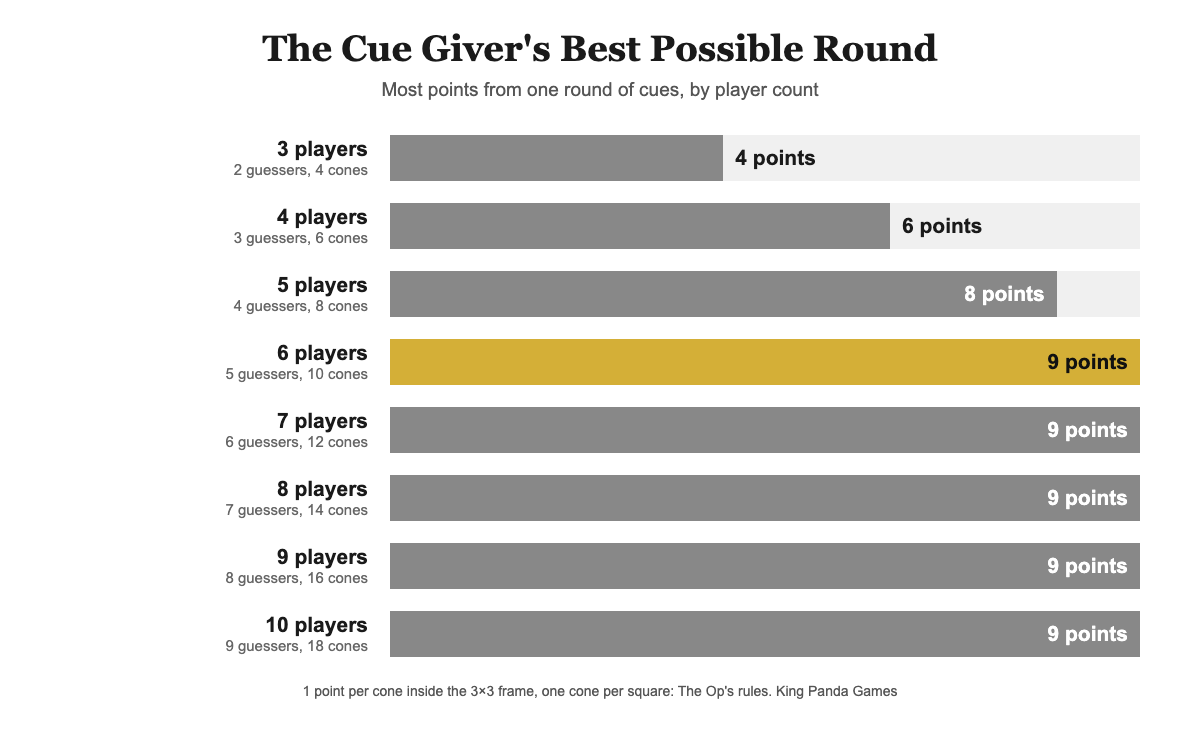
On the scoring maths, Hues and Cues is best with 6 players. The box says 3 to 10.
Here’s why. With six, there are ten guessing cones on the board, so the cue giver can fill all nine squares of the frame and hit the maximum of 9 points. And at 4 to 6 players, the rules have everyone give cues twice, so you still get two turns in the hot seat.
At 7 or more, each player is the cue giver only once, and the second round of guessing gets crowded. At 3, there are only four guessing cones, so the cue giver can never score more than 4 in a round, and the rulebook doesn’t say how many rounds to play.
Replayability
Hues and Cues has 100 cards with four colors each, so you’ll rarely see the same target twice. The problem isn’t the cards; it’s that the game itself is the same every time.
The 480-square board never changes. Within a few games, everyone knows where the greens turn yellow and where the pinks go purple, and the cues settle into the same kinds of food, flowers and fruit. That’s why the first two or three games are the best ones.
There are no expansions. If you want more variety, the honest answer is a different game.
Awards
Hues and Cues was nominated for the 2020 Golden Geek Light Game of the Year, and it won an Early Gamers Recommendation at the 2021 American Tabletop Awards, according to Wikipedia’s Hues and Cues article.
Playing Hues and Cues after Thanksgiving dinner? Our Thanksgiving Table Games pack has dinner bingo and 48 table-talk cards for the meal before it.
See it · $5
Want a game for every night of December, not just Hues and Cues nights? The Advent Game Night Calendar has 24 five-minute games that use things you already own.
See it · $6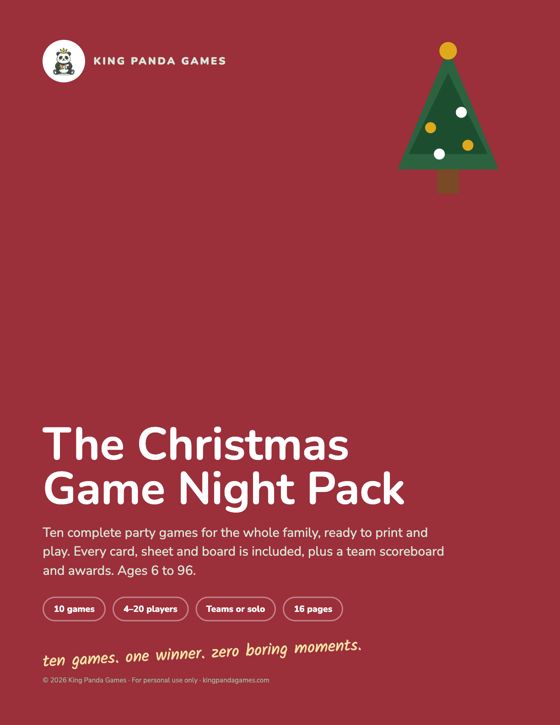
Bringing Hues and Cues to Christmas? The Christmas Game Night Pack has 10 more party games that need no box.
See it · $7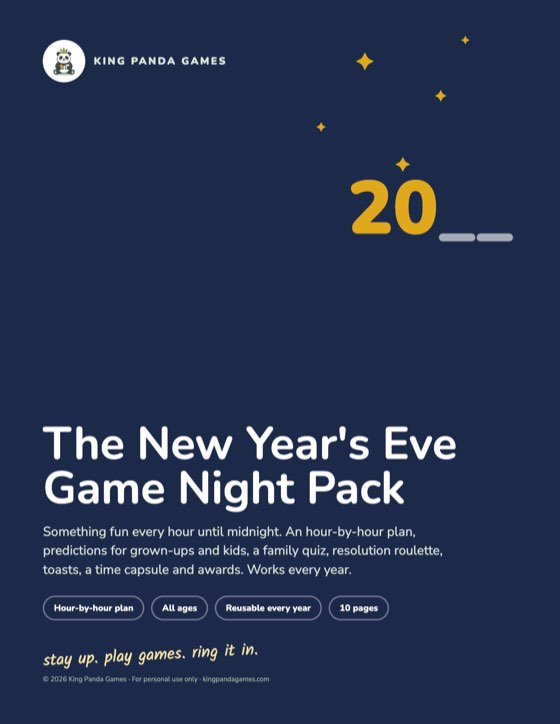
Playing Hues and Cues on New Year’s Eve? Our New Year’s Eve pack plans the rest of the night to midnight.
See it · $5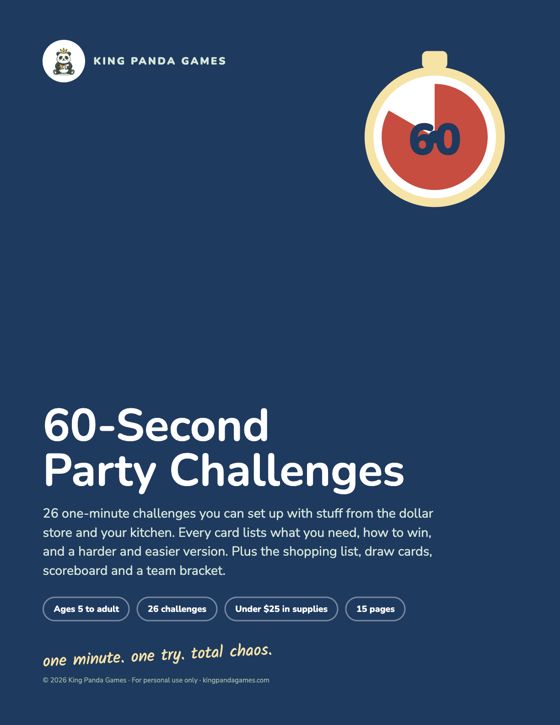
Hosting a Hues and Cues night? 60-Second Party Challenges are 26 one-minute games to play between rounds.
See it · $6Similar Games
If you like Hues and Cues, try Wavelength — same idea of guessing what someone means, but on a dial between two opposites like “hot” and “cold,” and played in teams. It has far more replay value. See our Wavelength review, or our head-to-head, Hues and Cues vs Wavelength.
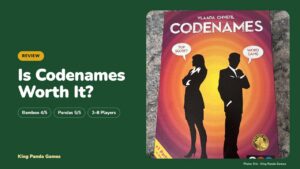
If you like Hues and Cues, try Codenames — one-word clues again, but you’re linking words on a grid for your team and avoiding the assassin. More strategy, still easy to teach. See our Codenames review.
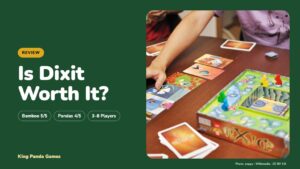
If you like the picture-guessing side, try Dixit — players describe dreamlike art cards and try to be understood by some players but not all. Our Dixit review covers it.
Tips & Tricks
Name a thing, not a color. “Flamingo,” “avocado” and “denim” work better than “rosy” or “earthy,” because everyone pictures the same object.
Use your first cue to land the region, your second to land the square. One word gets the table to the right part of the board; the two-word cue is for nudging them lighter, darker or warmer.
The rule: if the first cones all landed in or near the frame, pass on your second cue. The rules let you, and it locks in your score before anyone wanders off.
As a cue giver, avoid colors on the edge of the board. The frame is cut off at the edge, so fewer squares score. A corner color leaves just four squares inside the frame, which caps your score at 4.
Guess first if you can. Each square takes only one cone, so the first guessers get the best spots. On the second round, order runs counterclockwise, so the player who guessed last goes first.
Our Hues and Cues strategy guide covers each of these with the numbers.
Frequently Asked Questions
Is Hues and Cues worth buying?
Yes, for families who play a few times a year. We rate it 5/5 Bamboo and 2/5 Pandas: it’s the easiest party game to teach, but after two or three games it loses a lot of its pull.
How long does a game of Hues and Cues take?
About 30 minutes. With 4 to 6 players everyone gives cues twice, and with 7 or more everyone gives cues once.
Can you play Hues and Cues with 2 players?
Not by the official rules, which need at least 3. With only one guesser there’s nothing to compete over, so for two players a different game is a better choice.
Is Hues and Cues good for kids?
Yes. It’s rated 8 and up, needs no reading, and the rules include an easier variant where younger players pick any color on the board instead of drawing a card.
Can colorblind players play Hues and Cues?
Some can, but it’s harder. A reviewer quoted on Wikipedia raised the concern, and designer Scott Brady said the game was playtested successfully with color-deficient players. It depends on the person and the type of color blindness.
Is Hues and Cues better than Wavelength?
Not for us. Both are easy guessing games, but Wavelength has more variety from game to game. We rate Wavelength 5/5 Pandas and Hues and Cues 2/5.
Does Hues and Cues have an expansion?
No. There’s one edition, with 100 color cards and the 480-color board.
Want to go deeper?
- Hues and Cues Strategy — how to give cues that score, with the numbers behind the board. Read it here
- How to Play Hues and Cues — setup, cues, scoring and how many rounds to play. Read it here
- Hues and Cues vs Wavelength — which guessing game to buy. Read it here
Verdict
Buy it if your family wants a party game anyone can learn in two minutes and you’ll play a few times a year. Skip it if your group plays every week; it won’t last. Get Wavelength instead if you want a guessing game that stays fresh.
Hues and Cues official site: The Op’s Hues and Cues page