


The 9 Best Deck-Building Games (and What Each Changes From Dominion)
Every deck-building game is a descendant of Dominion. You start with a small, weak deck, buy better cards as you play, and your deck gets stronger as the game goes on. The best deck-building games keep that loop and change one thing about it, and that one thing decides whether a game is right for you.
So this list measures every pick against Dominion, the original, which we’ve played more than forty times. For each game we say what it changes. Dominion is the only one we’ve reviewed, so it’s the only one with our Bamboo and Pandas scores. The other eight are research-based picks and are labeled that way, chosen for how clearly each one changes the formula.
Some links below are Amazon affiliate links — as an Amazon Associate, King Panda Games earns from qualifying purchases at no extra cost to you. Full disclosure.
Last verified: October 2026.
1. Dominion — The Original, and Still the Default
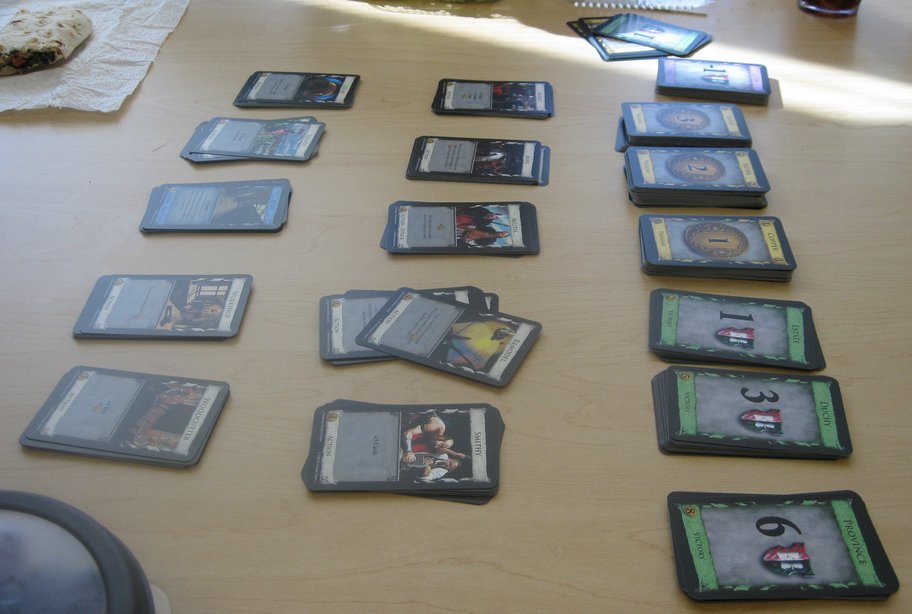
Dominion is where deck-building started, and it’s the game every other pick on this list is measured against. Everyone starts with the same ten weak cards and buys better ones from a market of ten card types chosen for that game. Turns follow three steps, Action, Buy and Clean-up, and the whole puzzle is working out which combination of the ten wins.
We’re 40-plus plays in and still hitting setups that make us rethink our openings. It scored 4/5 Bamboo and 4/5 Pandas in our Dominion review. It’s cerebral rather than social, and the table goes quiet while it’s out. It seats 2–4 and plays in about 30 minutes, and Rio Grande Games publishes it. Start with our first game guide, then the best kingdom cards.
What it changes from Dominion — nothing. This is the reference point.
Check Dominion price on Amazon →
2. Star Realms — Dominion as a Pocket-Sized Knife Fight
Star Realms is a two-player deck-builder about space fleets. Each player starts at 50 authority, and the goal is to knock your opponent down to zero. Instead of Dominion’s fixed market, five cards flip up from a shuffled trade deck, so you build from whatever floats past.
We haven’t played Star Realms yet, so this pick is research-based. Our Dominion vs Star Realms comparison covers the trade-off in detail. Star Realms rewards opportunists and plays in about 20 minutes. It’s built for two, with rules for bigger games if you buy extra decks, and the small box makes it a natural travel game.
What it changes from Dominion — a random market and direct combat, so you’re attacking your opponent instead of racing them.
Check Star Realms price on Amazon →
3. Clank! — Deck-Building With a Dungeon
Clank! puts a board under the deck-building. Your cards move you through a dungeon, let you fight monsters and buy new cards, and some of them make noise. Every noise adds a cube to a bag, and when the dragon attacks, cubes are drawn to see who gets hurt. You’re trying to grab treasure and get out before your luck runs out.
We haven’t played Clank! yet, so this pick is research-based. It’s listed for 2–4 players, ages 12 and up, at 30–60 minutes. It’s the pick for groups who find Dominion too abstract and want their deck to be doing something on a map.
What it changes from Dominion — a board to explore and a push-your-luck race to get out alive.
Check Clank! price on Amazon →
4. The Quacks of Quedlinburg — Bag-Building With Exploding Potions
Quacks swaps the deck for a bag. Each round you draw ingredient chips from your bag into a potion, one at a time, and stop whenever you like. Draw too many white chips and the potion explodes. Between rounds you buy better chips, so your bag improves the way a Dominion deck does.
We haven’t played Quacks yet, so this pick is research-based. It won the 2018 Kennerspiel des Jahres, the German award for the best connoisseur game, and it’s listed for 2–4 players, ages 10 and up, at about 45 minutes. Everyone draws at the same time, so nobody waits.
What it changes from Dominion — a bag instead of a deck, and a push-your-luck draw that makes the whole table groan together.
Check The Quacks of Quedlinburg price on Amazon →
5. Lost Ruins of Arnak — Deck-Building Meets Worker Placement
Lost Ruins of Arnak uses your deck to power an expedition. Cards pay for travel to sites on the board where you place your workers, dig up artifacts and fight guardians. Every card is a choice between playing it for its effect and spending it to travel, which makes a small hand feel full of decisions.
We haven’t played Arnak yet, so this pick is research-based. It seats 1–4, ages 12 and up, at 30–120 minutes depending on the group. It’s the deck-builder for people who like Everdell-style worker placement, and if that’s you, our strategy board games list has more.
What it changes from Dominion — a board and workers, so the deck is the engine and not the whole game.
Check Lost Ruins of Arnak price on Amazon →
6. Dune Imperium — The Heavy One
Dune: Imperium blends deck-building with worker placement and combat for control of the desert planet. Each card you play sends an agent to a matching space on the board, and the cards you hold back power your reveal turn. Every round ends in a fight over a conflict card, and alliances with the four factions decide a lot of the scoring.
We haven’t played Dune: Imperium yet, so this pick is research-based. It’s listed for 1–4 players, ages 14 and up, at 60–120 minutes. It’s the longest and most involved pick here, and it suits groups who’ve played Dominion to death and want the deck to be one system among several.
What it changes from Dominion — a board, combat and politics, and a much longer game.
Check Dune: Imperium price on Amazon →
7. Aeon’s End — The Co-op Deck-Builder With No Shuffling
Aeon’s End is cooperative. You’re mages defending the last city against a nemesis, and the team wins or loses together. Its big idea is that you never shuffle your deck. When it runs out you flip your discard pile over in the order you discarded it, so you can plan your next hand.
We haven’t played Aeon’s End yet, so this pick is research-based. It plays in about 60 minutes for up to four players, and turn order is shuffled each round instead of your cards. If the co-op side appeals, our best cooperative board games list has more.
What it changes from Dominion — cooperation, and no shuffling, so luck moves from your cards to the turn order.
Check Aeon’s End price on Amazon →
8. Legendary Marvel — Superheroes Against a Mastermind
Legendary puts Marvel heroes in your deck and a villain on the table. The team recruits heroes to build stronger decks and fights the villains that keep arriving, working toward defeating a mastermind. Everyone wins or loses together, but the player with the most victory points at the end gets the bragging rights.
We haven’t played Legendary yet, so this pick is research-based. It’s listed for 1–5 players, ages 14 and up, at about 45 minutes, and there are a lot of expansions and themed versions. It’s the pick for a group of Marvel fans.
What it changes from Dominion — a shared enemy, a theme everyone recognizes, and a semi-cooperative score.
Check Legendary Marvel price on Amazon →
9. Ascension — The Center Row Classic
Ascension is one of the early games that followed Dominion. Instead of a fixed market, a center row of six cards refreshes every time someone buys, and you spend two different resources, one to recruit heroes and one to defeat monsters. Honor points decide the winner.
We haven’t played Ascension yet, so this pick is research-based. It seats 1–4 and plays in about 30–60 minutes. It’s closest in feel to Star Realms, with a fantasy theme and more players at the table.
What it changes from Dominion — a random, shifting market and two currencies instead of one.
Check Ascension price on Amazon →
Which One to Buy
If you’ve never played a deck-builder, buy Dominion. It’s the clearest way into the idea we know, and its expansions keep it fresh for years.
If you already own Dominion, buy for the thing you want changed. Star Realms if you want to fight, Quacks if you want the table laughing, Clank! or Arnak if you want a board, Aeon’s End or Legendary if you want to play together, and Dune: Imperium if you want the longest, most involved game here. For two players on a budget, Star Realms is the usual recommendation, and our best 2-player games list has more options.
The Quick Picks Table
All nine, with what each one changes from Dominion.
| Game | Players | Time | What it changes | Our basis |
|---|---|---|---|---|
| Dominion | 2–4 | 30 min | The original | Reviewed, 4 / 4 |
| Star Realms | 2 | 20 min | Random market, direct combat | Research |
| Clank! | 2–4 | 30–60 min | A dungeon board, push your luck | Research |
| The Quacks of Quedlinburg | 2–4 | 45 min | A bag instead of a deck | Research |
| Lost Ruins of Arnak | 1–4 | 30–120 min | Workers on a board | Research |
| Dune Imperium | 1–4 | 60–120 min | Board, combat and factions | Research |
| Aeon’s End | 1–4 | 60 min | Co-op, no shuffling | Research |
| Legendary Marvel | 1–5 | 45 min | Shared enemy, semi-co-op | Research |
| Ascension | 1–4 | 30–60 min | Shifting center row | Research |
For more game-night picks across every type, see our best board games list.
Frequently Asked Questions
What is the best deck-building game?
Dominion. It started the genre, it is the one we have played most, more than forty times, and its ten-card market means no two games play the same.
What is the best deck-building game for 2 players?
Dominion, which is at its best with two, or Star Realms, the usual recommendation for a fast, cheap head-to-head game. Star Realms plays in about 20 minutes and fits in a pocket.
What is a good cooperative deck-building game?
Aeon’s End, where the team defends a city and nobody ever shuffles their deck. Legendary Marvel is the other option, with a shared enemy and a winner on points at the end.
What is the difference between deck-building and bag-building?
In bag-building games like The Quacks of Quedlinburg you draw chips from a bag instead of cards from a deck. You still improve what you draw from over the game, but drawing one chip at a time adds a push-your-luck element.
Which deck-building games have a board?
Clank!, Lost Ruins of Arnak and Dune: Imperium all use your deck to move or place workers on a board. They suit players who find Dominion too abstract.