

Search for a playmat and you will be shown two products that have almost nothing in common. One is 24 by 14 inches — a personal play area for one person’s cards. The other is three feet by five and covers an entire table.
Buying the wrong one is the single most common way people waste money here. A card mat sits under about a third of a board game and leaves everyone else playing on bare wood. A full table mat is comically oversized for two people playing a card game at a kitchen counter.
So this list is split by that line, because the line is the decision. Five picks: three card mats, two table mats, and an honest note about the ones we could not include.
How these picks were chosen. This is research into sizes, materials and edge construction against manufacturers’ own specifications — not a shelf of mats we own and have worn out. Where sources disagree, which they do on thickness, that is said plainly rather than resolved by picking a number.
Some links below are Amazon affiliate links — as an Amazon Associate, King Panda Games earns from qualifying purchases at no extra cost to you. Full disclosure.
1. Dragon Shield — The One to Buy Without Thinking
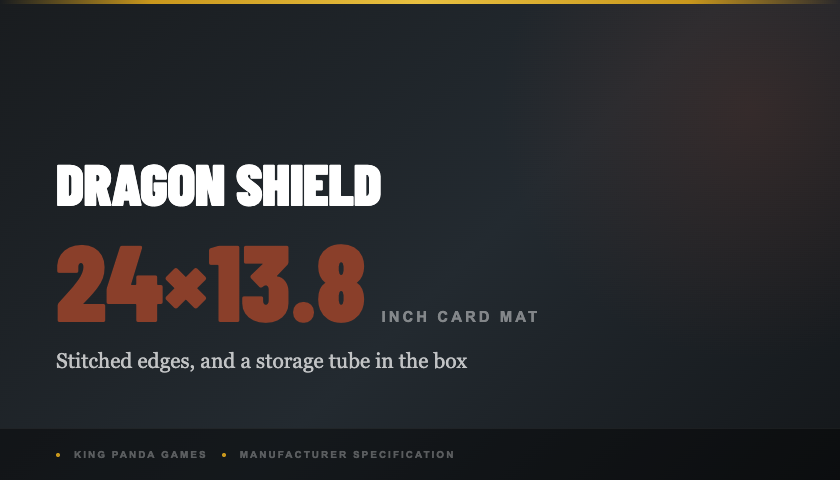
Card mat · 24 × 13.8 in
Dragon Shield’s mats get the boring things right, which is all that actually matters once the artwork stops being new. Stitched edges, a textured rubber underside, and the soft fabric top that card mats exist for — it is what lets you get a fingernail under a card instead of scraping it off the table.
The detail that separates them: a hard storage tube comes in the box. The other card mats here ship in a drawstring bag or a sleeve, and a bag is how mats end up folded, and a fold across the playing surface never comes out. Getting the storage solved at purchase is worth more than it sounds.
The drawback: the range is dominated by Dragon Shield’s own house artwork. If you want something specific on your mat, this is not the one.
Best for: anyone who plays Magic, Pokémon or Yu-Gi-Oh regularly and does not want to think about it again.
Check Dragon Shield playmat price on Amazon →
2. Ultra Pro — The Value Pick
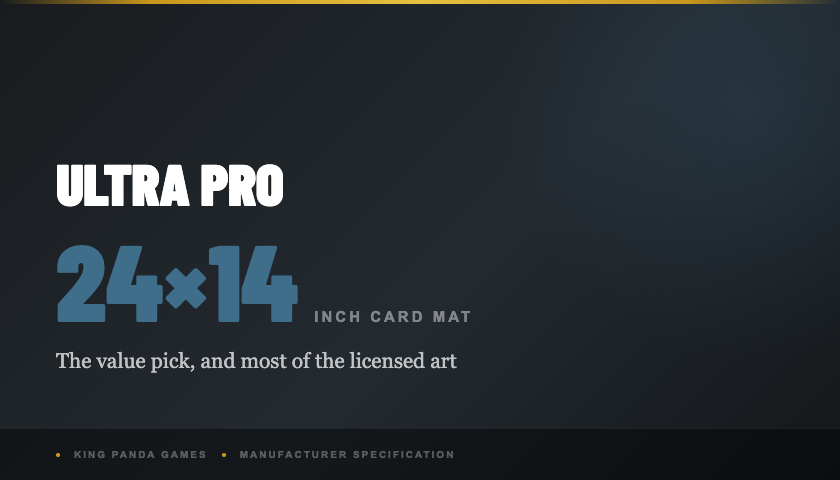
Card mat · 24 × 14 in
Ultra Pro is the brand you have already played on without noticing, because it supplies half the licensed mats in the hobby. The construction is the standard recipe — soft fabric top to protect card faces, non-slip rubber backing — and the cheaper end of their range undercuts most of the market.
The licensing is the real argument. If you want a mat with specific Magic artwork or a particular Pokémon on it, Ultra Pro is usually the brand that has the licence.
The drawback: at the budget end the edges are often unstitched, and an unstitched edge is on a timer. Check that specific listing before buying — it is the difference between a mat that lasts five years and one that starts fraying this winter.
Best for: a first mat, a spare, or a specific piece of licensed art.
Check Ultra Pro playmat price on Amazon →
3. Inked Gaming — For Putting Your Own Thing On It
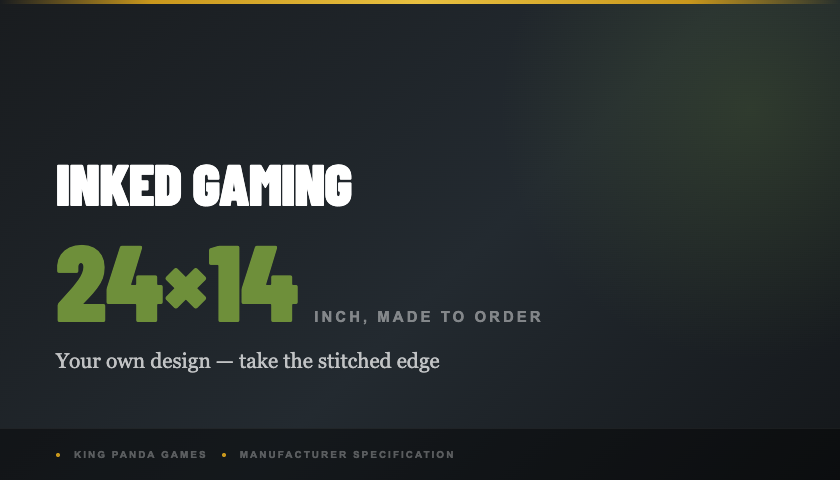
Card mat · 24 × 14 in
Inked Gaming prints to order, and offers the choice that matters: plain edge or stitched. Take the stitched one. The price gap is small and it is the only part of a mat that reliably fails.
This is the pick if you want your own image, a commissioned piece, or a design nobody else at the table has. It is also the one to look at if you want a mat sized for something other than a standard card game — made-to-order means the dimensions are not fixed to the 24 by 14 default.
The drawback: you are buying a print to order, which means no returning it because the design was not what you pictured. Fabric is not a monitor, and Inked Gaming is printing exactly the file you approve — the risk sits with your artwork, not their press.
Best for: anyone who cares what their mat looks like more than what it costs.
Check Inked Gaming playmat price on Amazon →
4. Allplay — The Board Game Table Mat
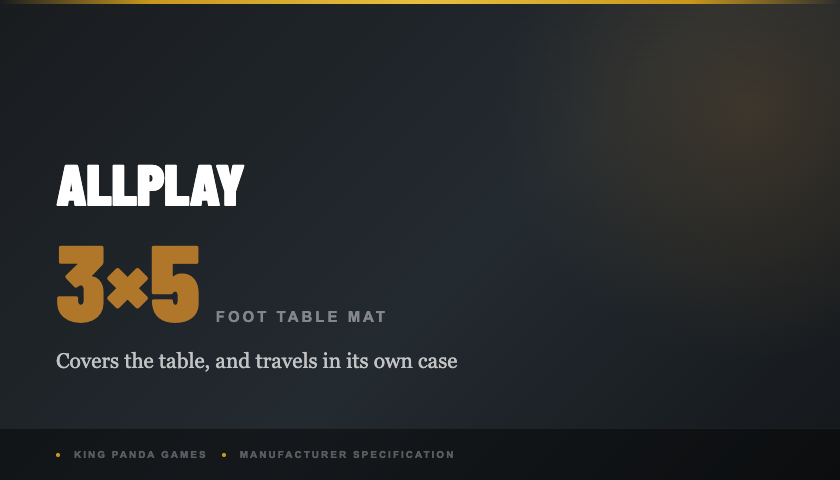
Table mat · 2.5’×4′, 3’×5′ and 3.5’×5.5′
Allplay’s mats are the ones built for the other job: covering a table so that an entire game sits on a soft, quiet, non-slip surface. Dice stop skittering off the edge, cards stop being impossible to pick up, and a scratched dining table stops being a reason not to host.
Three sizes, and this is where the size warning matters most. The 3’×5′ suits a typical four-player game on a standard dining table. The 2.5’×4′ is for smaller tables and two to three players. Measure before buying; the common regret is going one size down to save money and then finding two players’ areas hanging off the edge.
A carrying case with a shoulder strap is included, which is the difference between a mat that goes to game night and one that stays home.
The drawback: around $80, which is more than the price of some of the games you will put on it.
Best for: anyone who hosts, and anyone whose table is nicer than their games.
Check Allplay playmat price on Amazon →
5. Feltectors — The Spill-Proof One
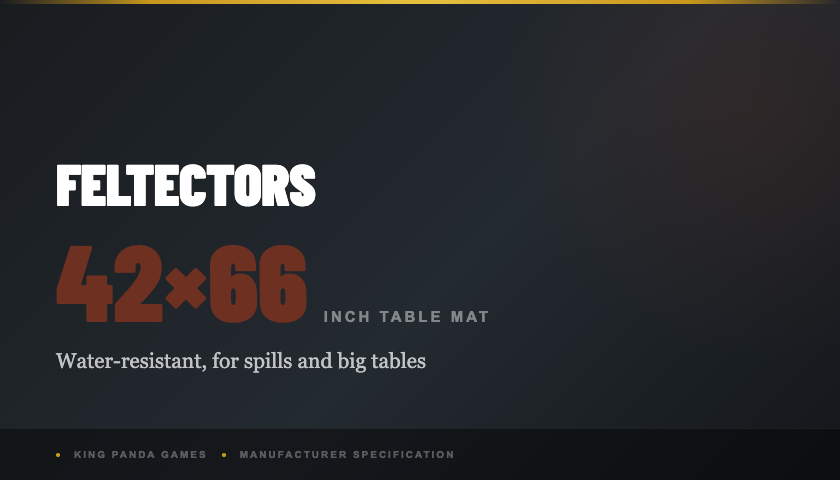
Table mat · 35″×35″ up to 42″×66″
Feltectors make the widest spread of table sizes here, from a 35-inch square for a small round table up to 42 by 66 inches, in a 5mm neoprene that is water-resistant rather than merely wipeable.
That matters more than it sounds. Most board game damage is not wear, it is one knocked-over drink. A water-resistant mat buys you the seconds needed to lift the board before anything soaks through — which is why this is the pick for households with children, or anyone whose group drinks red wine near a game they care about.
The drawback: the designs are plain and the listings are written for mahjong and poker players as much as board gamers. You are buying a surface, not a thing to look at.
Best for: family tables, large groups, and anyone who has already lost a game to a spill.
Check Feltectors board game mat price on Amazon →
The Three Things That Decide Whether a Mat Was Worth It
Artwork sells mats. These three decide whether you still like it in three years.
Size, and it is not close. Buyers under-buy far more often than they over-buy. For card games the 24 by 14 standard is settled and you do not need to think about it. For a table mat the number depends on how many people sit at it. At four players, 36 inches square is the floor — below that somebody ends up half on the mat and half on the table, which is worse than no mat at all. At two or three players, or on a small square or round table, the 30-by-48 and 35-inch options below are the right size rather than a compromise.
Edge construction is the only part that truly fails. A raw-cut edge sheds fibres within months and the fraying spreads. Stitched or heat-sealed edges solve it outright, and the thread should be nylon or polyester — cotton thread rots. If you compare two mats and can only check one specification, check this one.
Thickness matters least, and the guides disagree. Recommendations cluster somewhere between about 2 and 3mm, and different sources put the sweet spot at different points inside that band, which tells you the difference is preference rather than quality. Thinner rolls tighter for transport; thicker is softer and quieter under dice. Below roughly 1.5mm a mat stops lying flat on its own, and that is the only threshold worth treating as a rule.
What Is Not Here, and Why
Some of the best board game mats in existence are not on this list, and it is worth saying so plainly rather than letting you assume they do not exist.
Publishers make mats cut to their own games. Stonemaier sells a Scythe mat at 92 by 72cm for around $30, and a double-sided Wingspan mat covering both the original and Oceania layouts for about $10. Leder Games sells a double-sided Root mat with the fall and winter boards. These are excellent, and for those three games they beat anything generic because they are shaped to the board.
They are missing here for one reason: they are sold direct by the publishers, not through Amazon. If you own Scythe, Wingspan or Root, go and look at the publisher’s own store before buying anything on this page.
A note on Stonemaier’s naming, since it causes confusion: the Scythe mat is listed as a “Natural Rubber Playmat” while the description on the same page calls the material neoprene. That is their copy, not a transcription error here.
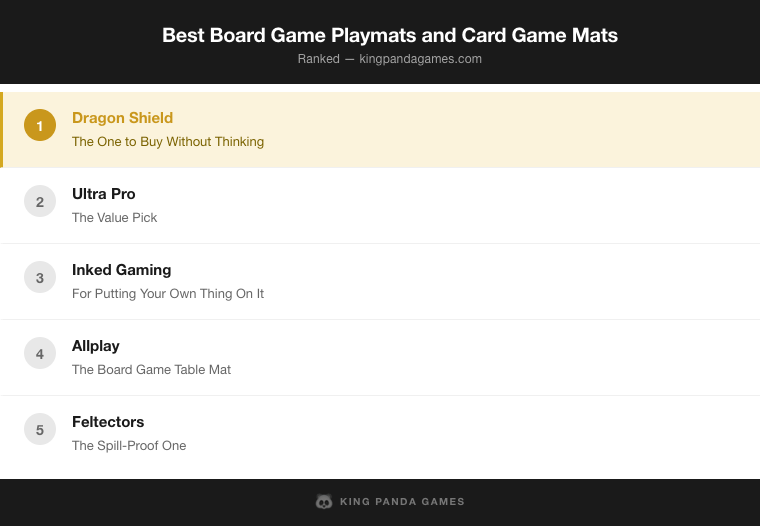
The Quick Picks Table
| Pick | Type | Size | Best for |
|---|---|---|---|
| Dragon Shield | Card mat | 24 × 13.8 in | Buying once and forgetting about it |
| Ultra Pro | Card mat | 24 × 14 in | Value, and licensed artwork |
| Inked Gaming | Card mat | 24 × 14 in, custom | Your own design |
| Allplay | Table mat | up to 3.5′ × 5.5′ | Hosting board game night |
| Feltectors | Table mat | up to 42 × 66 in | Spills, kids, big tables |
If You Are Upgrading One Game in Particular
A mat is rarely the first upgrade worth buying for a specific game. Dominion is the clearest exception — the marked zones on a dedicated mat genuinely help new players keep deck, discard and play area straight, which is the one case where a mat teaches rather than just protects.
For most other games the money goes further elsewhere: an insert that cuts setup time, or sleeves on a deck that gets handled every turn. Our review of Blood Rage covers where a mat sits against paint and figure trays, and Everdell is the usual argument for upgrading components before surfaces.
If the plastic is what you care about, board games with miniatures worth painting is the better place to spend. For add-ons generally, see the best board game expansions, and our best board games list if you are still choosing the game itself.
Frequently Asked Questions
What size playmat do I need?
It depends entirely on which kind of game. Card games use a 24 by 14 inch mat, which is one personal play area for one player. Board games need a mat that covers the table — 36 inches square is the practical floor for four people, and most buyers go too small rather than too big.
Are stitched edges on a playmat worth it?
Yes, and it is the one specification worth paying for. A raw-cut edge starts shedding fibres within months of regular use, and once it begins there is no fixing it. Stitched or heat-sealed edges stop that, and the thread should be nylon or polyester rather than cotton.
How thick should a playmat be?
Roughly 2 to 3mm covers almost every recommendation you will find, and guides disagree within that band rather than outside it. Thinner mats roll tighter and travel better; thicker mats feel softer and quieter but take more bag space. Below about 1.5mm a mat stops lying flat, which defeats the purpose.
Can you use a card game playmat for board games?
Not really. A 24 by 14 inch mat is smaller than most board games’ boards, so it ends up sitting under part of the game while the rest of the table stays bare. It works as a personal area for your own cards and tokens in a board game, which is a different and much more limited job.
Do playmats stop cards from sliding?
They do the opposite for cards and the right thing for the mat. The fabric top makes it easier to slide a fingernail under a card to pick it up, which is the main reason card players use them. The rubber underside is what stops the mat itself from travelling across the table.
How do you store a playmat without creasing it?
Roll it with the fabric side out and store it in a tube or the bag it came with. Folding puts a permanent crease across the playing surface. Dragon Shield includes a storage tube in the box; most other brands supply a drawstring bag or sleeve instead.
Are there official playmats for specific board games?
Yes. Stonemaier sells mats for Scythe and Wingspan and Leder Games sells one for Root, all cut to those games’ boards. They are only available direct from the publishers rather than through Amazon, which is why they are not ranked on this page.