

Best Board Games Under $30: 9 Picks That Are Actually Worth It
Some links below are Amazon affiliate links — as an Amazon Associate, King Panda Games earns from qualifying purchases at no extra cost to you. Full disclosure.
Bottom line: You don’t need to spend $50+ to get a great game night. The best games under $30 are almost all small-box card games with tight mechanics — and several of them are genuinely among the best games at any price. This list skips the filler and the gimmicks. Every pick here has been played repeatedly, not just unboxed.
Some links on this page are affiliate links. If you buy through them, King Panda Games may earn a small commission at no extra cost to you. It never changes which games make the list.
Free Download
Get This List as a PDF
Download the free KPG Budget Board Games Guide — all 9 picks in a clean, printable format you can take to the store.

Cheap board games have a reputation problem. The ones at the front of the Target aisle — Trouble, Sorry, basic card sets — have conditioned people to expect that budget means boring. That reputation doesn’t apply to modern games.
The board game hobby has produced some of its sharpest, most replayable designs in small-box formats that clock in under $20. Codenames. Skull. Coup. Love Letter. None of these cost more than a dinner out, and all of them have sat on tables well past midnight.
This list covers the nine best board games you can buy for under $30. Every one has been played — not just researched. Here’s what’s worth your money.
Quick Comparison
| Game | Price | Players | Time | Best For |
|---|---|---|---|---|
| Codenames | ~$20 | 4–10+ | 15–30 min | Groups, parties |
| Skull | ~$18 | 2–6 | 15–20 min | Adults, bluffing fans |
| Coup | ~$15 | 2–6 | 15 min | Social deduction fans |
| Sushi Go! | ~$15 | 2–5 | 20 min | Families, beginners |
| 7 Wonders Duel | ~$28 | 2 | 30 min | Couples, strategy fans |
| Sequence | ~$22 | 2–12 | 30–45 min | Families, large groups |
| Carcassonne | ~$30 | 2–5 | 45–60 min | Strategy, gateway gamers |
| Love Letter | ~$12 | 2–6 | 20 min | Quick games, travel |
| Hive Pocket | ~$22 | 2 | 20–30 min | Abstract strategy fans |
1. Codenames — Best Overall
~$20 | 4–10+ players | 15–30 min | Age 14+
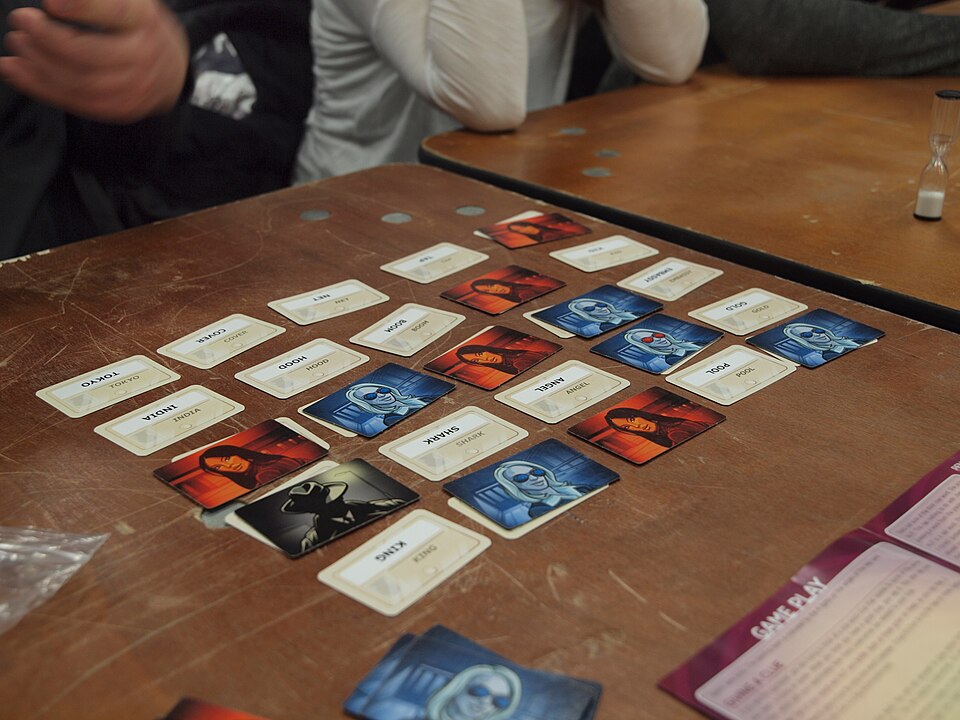 Codenames board game set up on a table” loading=”lazy” style=”max-width:100%;height:auto;max-height:420px;border-radius:10px;” />
Check Codenames price on Amazon →
Codenames is one of the best party games ever made, and it costs $20. The setup is 25 word cards in a grid. Two spymasters give one-word clues to get their team to guess the right cards without hitting the assassin. Simple premise, endlessly replayable execution.
What makes it work is the spymaster role. Trying to link three unrelated words with a single clue — and watching your team confidently guess the wrong one — is the most consistently funny thing in board gaming. Every group has a story about a clue that went catastrophically wrong.
Best for: Any group that can hold a conversation. Works with coworkers, in-laws, and hardcore gamers alike.
Key drawback: Needs at least 4 players to work properly. Not a 2-player option.
Best player count: 6–8. The teams are big enough to debate clues, which is half the fun.
2. Skull — Best Bluffing Game
~$18 | 2–6 players | 15–20 min | Age 10+
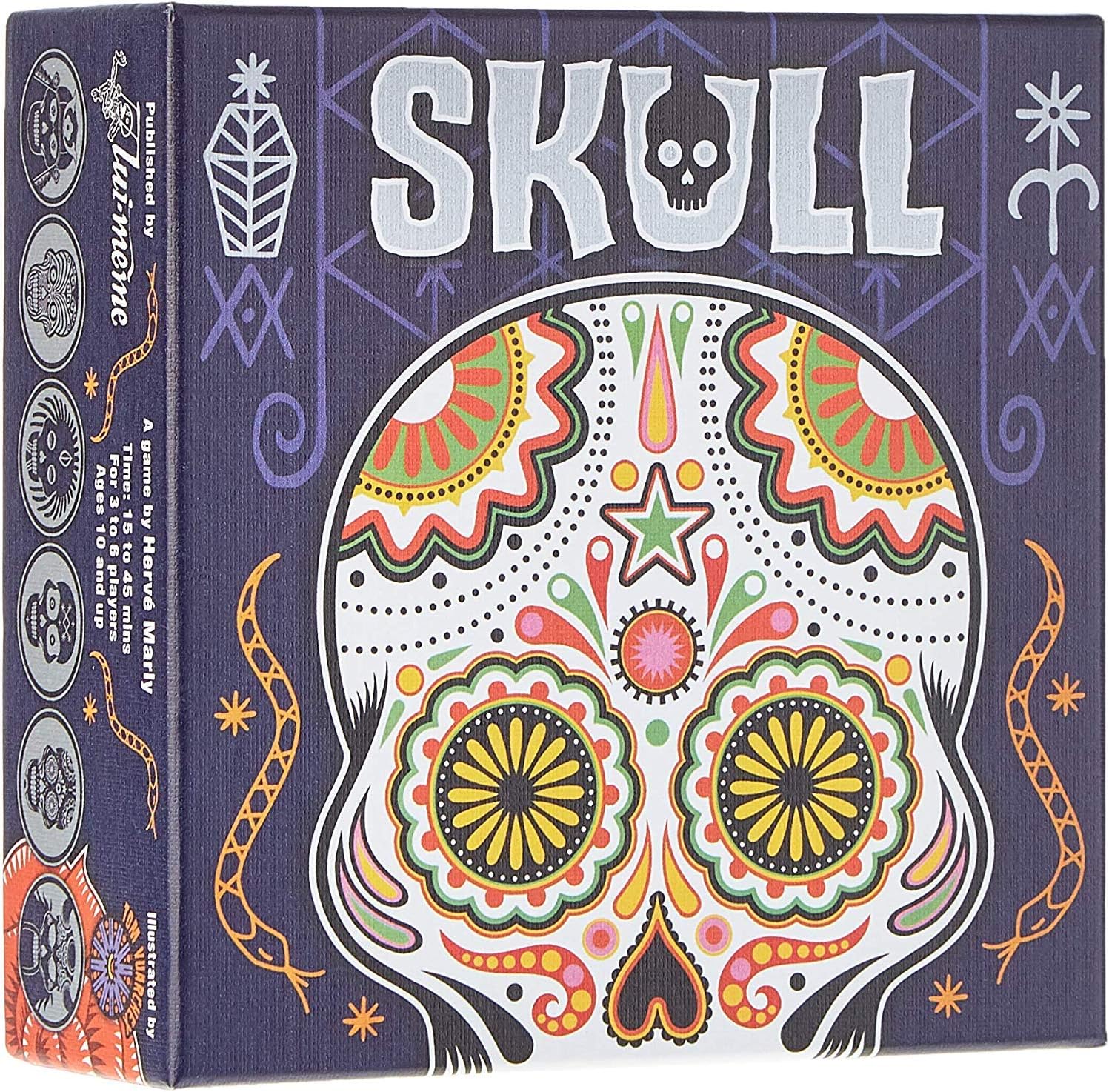 Skull card game box cover” loading=”lazy” style=”max-width:100%;height:auto;max-height:420px;border-radius:10px;” />
Skull has no words, no numbers, and no board. Each player has four coasters — three flowers, one skull — and the entire game is about placing them face-down and betting on how many you can flip without hitting a skull. That’s it. That’s the game.
It sounds too simple to be interesting. It isn’t. Skull is pure psychological poker. Every bet is a read of the people at the table. Experienced players don’t win by having skulls in weird spots — they win by having a table read good enough to force someone else into their skulls.
It’s one of those games that makes non-gamers immediately dangerous.
Best for: Adults who like reading people. Works great as a warm-up game before something heavier.
Key drawback: Might feel too light for groups who want something meatier.
Best player count: 4–6. At 2 or 3, there’s not enough social pressure to make the bluffing tense.
3. Coup — Best 15-Minute Game
~$15 | 2–6 players | 15 min | Age 13+
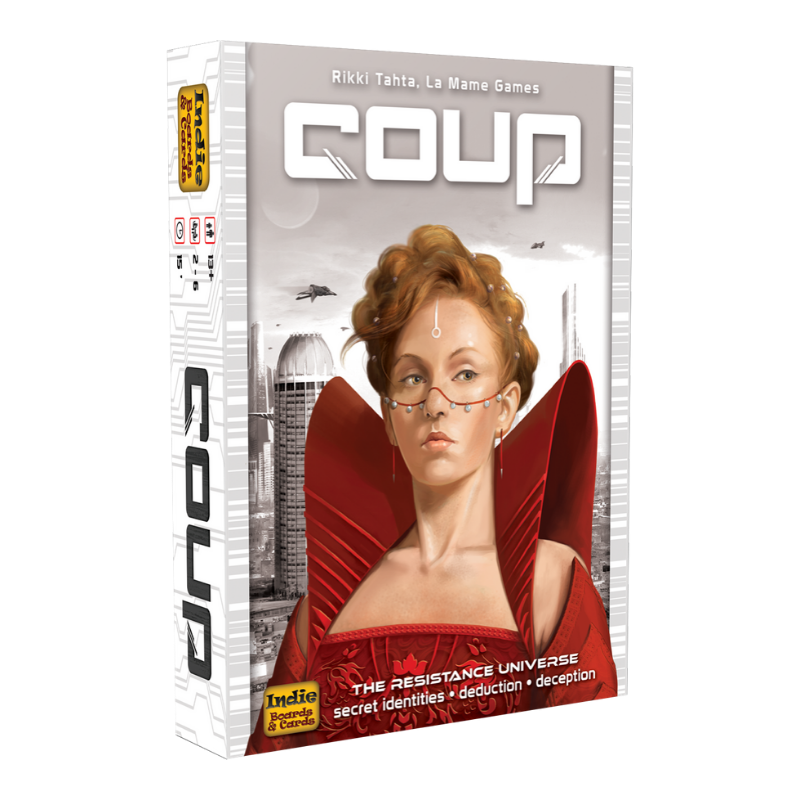 Coup card game box cover” loading=”lazy” style=”max-width:100%;height:auto;max-height:420px;border-radius:10px;” />
In Coup, everyone has two hidden role cards and a set of actions tied to those roles. You can lie about which roles you have. Other players can call your bluff. If they’re wrong, they lose a card. If you’re caught lying, you lose a card. Last player standing wins.
The first game takes 10 minutes to learn and another 5 minutes to play. Every game after that gets sharper.
Coup is the purest expression of social deduction at this price point. There’s no board, no fluff — just decisions and reads. It’s also one of the few games where losing is still fun, because you usually saw it coming and chose wrong anyway.
Best for: People who love Resistance or Secret Hitler but want something that ends in 15 minutes.
Key drawback: Kingmaking is possible in larger games — eliminated players can still influence the remaining players before they go out.
Best player count: 5–6. More players means more chaos and more convincing lies.
4. Sushi Go! — Best for Families
~$15 | 2–5 players | 20 min | Age 8+
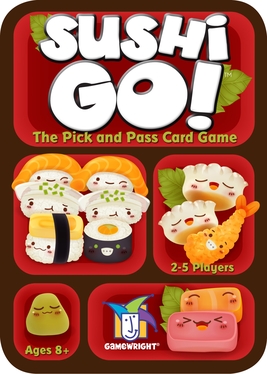 Sushi Go! card game box cover” loading=”lazy” style=”max-width:100%;height:auto;max-height:420px;border-radius:10px;” />
Check Sushi Go! price on Amazon →
Sushi Go! is a drafting game where you pick one card from your hand and pass the rest. The cards are sushi dishes — nigiri, dumplings, maki rolls — and they score in different ways. It plays in 20 minutes and looks like a children’s book.
It’s also genuinely clever. The tension between grabbing what you need and denying what your opponent wants is real, just wrapped in the most approachable packaging in modern gaming.
The artwork alone gets it to the table with families who would never touch a game called “worker placement engine builder.” Once it’s there, it keeps getting played.
Best for: Families with kids 8 and up, beginners, anyone who needs to ease someone into the hobby.
Key drawback: Maxes out at 5 players — not ideal for larger family gatherings. Sushi Go! Party expands to 8 but costs a bit more.
Best player count: 3–4. Cards cycle more meaningfully and drafting decisions get sharper.
5. 7 Wonders Duel — Best 2-Player Game
~$28 | 2 players only | 30 min | Age 10+
 7 Wonders Duel box cover” loading=”lazy” style=”max-width:100%;height:auto;max-height:420px;border-radius:10px;” />
Check 7 Wonders Duel price on Amazon →
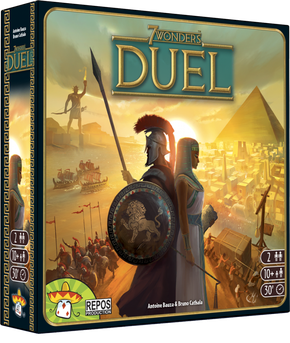
7 Wonders Duel is the best two-player board game under $30, and it’s not particularly close. It’s a complete strategic game — not a port of a bigger game squeezed down for two — with a card drafting system that forces both players to fight over the same shared pool of cards every round.
Three ways to win (military, scientific supremacy, or points) means the strategic lanes are genuinely different. The military track alone creates some of the most tension-filled moments in two-player gaming: watching your opponent inch closer to your capital while you scramble to push back.
We’ve reviewed it in depth. If you’re buying for couples or a gaming partner, this is the one. Read our full 7 Wonders Duel review.
Best for: Couples, roommates, anyone with a regular gaming partner.
Key drawback: Strictly 2 players — no flexibility there.
Best player count: 2 (it’s the only option, and it’s excellent).
6. Sequence — Best for Large Groups
~$22 | 2–12 players | 30–45 min | Age 7+
 Sequence board game box and board” loading=”lazy” style=”max-width:100%;height:auto;max-height:420px;border-radius:10px;” />
Check Sequence price on Amazon →
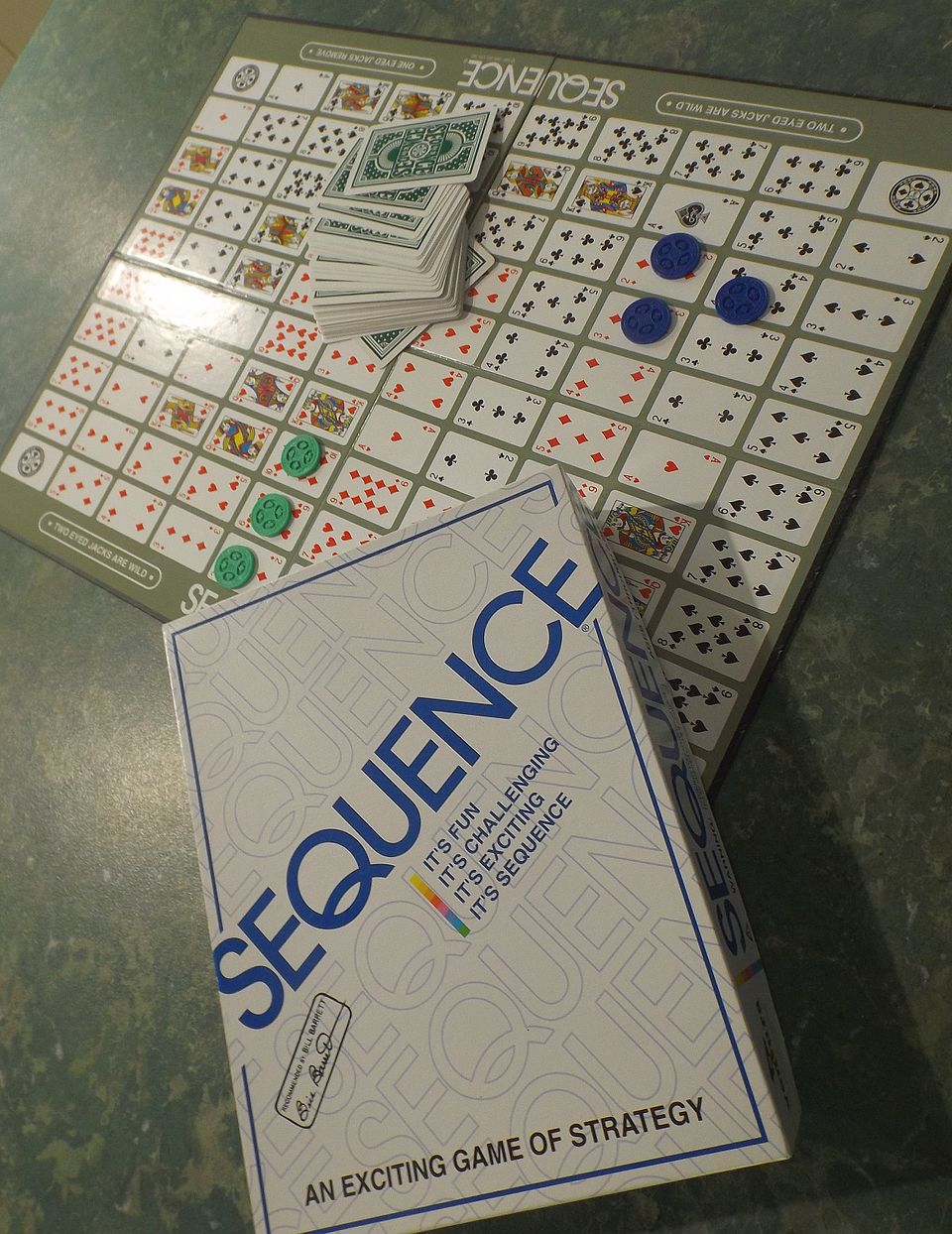
Sequence is a team-based game where you play a card from your hand and place a chip on the matching space on the board. First team to complete a set number of sequences wins. It crosses poker and bingo into something the whole table can play — including your grandparents and your 8-year-old cousin.
It scales to 12 players without falling apart, which is rarer than it sounds. Most games that claim large player counts become a waiting exercise. Sequence keeps everyone engaged because teams are playing simultaneously and blocking each other constantly.
It’s one of my personal favorites — it’s been on camping trips, holiday gatherings, and late-night sessions for years, and it always delivers. It also takes the Christmas-morning slot on our best Christmas board games list, where the grandparents are the ones on the floor with the kids.
Best for: Large family gatherings, mixed-age groups, casual game nights where not everyone is a “gamer.”
Key drawback: Experienced players will have a large edge over new players. Balance teams accordingly.
Best player count: 6 (three teams of two). The blocking gets interesting at this count without becoming chaotic.
7. Carcassonne — Best Gateway Strategy Game
~$30 (often on sale for $25) | 2–5 players | 45–60 min | Age 7+
 Carcassonne board game tiles and meeples” loading=”lazy” style=”max-width:100%;height:auto;max-height:420px;border-radius:10px;” />
Check Carcassonne price on Amazon →
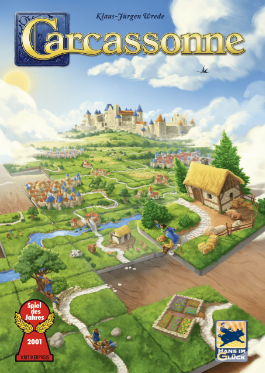
Carcassonne is tile-placement at its cleanest. You draw a tile, place it to extend the map of medieval France, and optionally place a meeple to claim a road, city, field, or monastery. It teaches in 10 minutes and rewards strategic thinking for years.
What makes it stick is the passive aggression. Nobody argues about Carcassonne. They just quietly block your city expansion for three turns and smile when your meeple gets stuck. It’s polite combat, which makes it perfect for groups who want strategy without confrontation.
We’ve reviewed it in full if you want the deep dive — including whether the expansions are worth it. Read our full Carcassonne review.
Best for: Families and couples ready to graduate from Ticket to Ride. Great first strategy game.
Key drawback: Technically crosses $30 at full retail — but it’s frequently $25 on Amazon and regularly discounted at Target.
Best player count: 2–3. The map fills more meaningfully and meeple competition is tighter.
8. Love Letter — Best Travel Game
~$12 | 2–6 players | 20 min | Age 10+
 Love Letter card game box cover” loading=”lazy” style=”max-width:100%;height:auto;max-height:420px;border-radius:10px;” />
Check Love Letter price on Amazon →
Love Letter is 16 cards and a handful of tokens. The entire game fits in a small bag. You hold one card, draw one card, play one card, and try to be the last player standing (or hold the highest card when the deck runs out). Rounds take five minutes.
It’s not trying to be a full evening’s entertainment — it’s the game you play while waiting for people to arrive, or the one you bring to a restaurant. At $12, it’s one of the best value purchases in the hobby.
Best for: Travel, warmup games, anyone who needs something portable.
Key drawback: Too light to anchor a game night on its own. Think of it as a side dish.
Best player count: 4. Enough players to create meaningful elimination tension.
9. Hive Pocket — Best Abstract Strategy
~$22 | 2 players | 20–30 min | Age 9+
 Hive Pocket abstract strategy game tiles” loading=”lazy” style=”max-width:100%;height:auto;max-height:420px;border-radius:10px;” />
Check Hive Pocket price on Amazon →
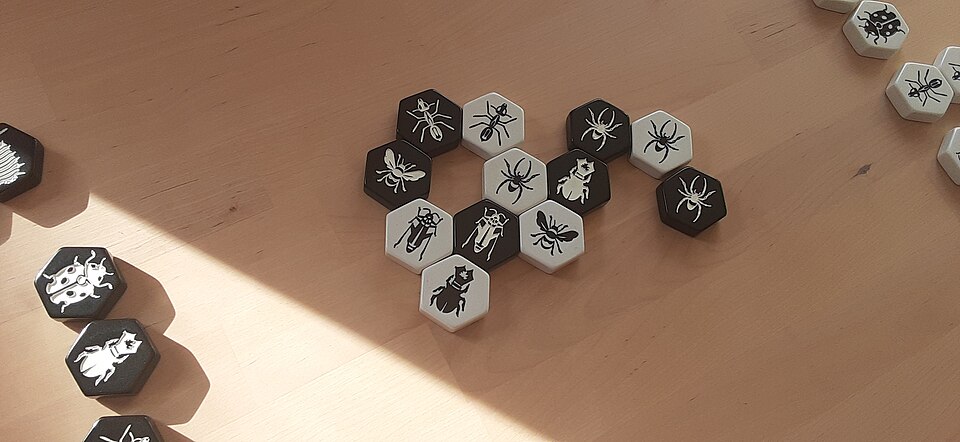
Hive Pocket is chess without a board. Each piece is a hexagonal tile representing an insect — bee, beetle, spider, ant — and each moves differently. The goal is to surround your opponent’s queen bee. There are no dice, no luck, no randomness. Just two people thinking several moves ahead.
It’s one of the most purely strategic games at this price point, and the pocket version travels anywhere. The physical pieces are weighted and satisfying in a way most card games aren’t.
Best for: People who love chess or abstract strategy. Strong two-player alternative to 7 Wonders Duel for non-card-game fans.
Key drawback: Zero luck means the better player wins almost every time. Not ideal for groups with mixed experience levels.
Best player count: 2 (the only option).
Who Should Buy What
Buying for a group (4+ people): Start with Codenames. Nothing else on this list handles 8+ players and still works this well.
Buying for couples or a gaming partner: 7 Wonders Duel. It’s built for two in a way most games aren’t.
Buying for families with kids: Sequence for larger groups and mixed ages. Sushi Go! if the kids are 8–12 and you want something faster.
Buying as a gift: Codenames if you don’t know their group size. Love Letter if you need something compact. Skull if they like social games. Buying in deal week? Our Black Friday board game deals page tracks which boxes actually get cut — Codenames is on both lists.
Buying your first “real” board game: Carcassonne. It’s the best gateway into modern strategy games at this price.
Take It With You
Free PDF — All 9 Games in One Page
Get the printable Budget Board Games Guide free. We’ll also send you our best game night picks — no spam, unsubscribe anytime.
Frequently Asked Questions
What is the best board game under $30?
Codenames is the best all-around board game under $30. It works with 4 to 10+ players, takes five minutes to explain, and creates genuinely memorable moments every session. It’s one of the few games that works equally well with family, coworkers, and serious gamers.
Are cheap board games worth buying?
Yes — price has almost nothing to do with quality in modern board games. Codenames, Coup, and Skull all cost under $20 and routinely outperform games that cost three times as much. The best budget games are small-box card games with tight, clever mechanics.
What board games are good for adults under $30?
Skull, Coup, and 7 Wonders Duel are the best adult board games under $30. Skull is pure psychological bluffing. Coup is a sharp social deduction game that plays in 15 minutes. 7 Wonders Duel is a full strategic two-player game that rivals titles costing twice as much.
What is the best 2-player board game under $30?
7 Wonders Duel is the best 2-player board game under $30. It’s a complete, strategic game built specifically for two — not a version of a bigger game that’s been squeezed down. It plays in 30 minutes and has real strategic depth.
What board games are good for families under $30?
Sequence and Sushi Go! are the best family board games under $30. Sequence works for ages 7 and up and handles 2 to 12 players, making it one of the most flexible family options available. Sushi Go! is faster, cuter, and ideal for families with younger kids.
Is Carcassonne worth buying?
Yes — Carcassonne is one of the best board games at any price point. It’s approachable enough for casual players but has real strategic depth, plays in 45 to 60 minutes, and gets better the more you play it. It frequently goes on sale for under $30.
What’s a good board game to give as a gift under $30?
Codenames is the safest gift choice under $30. It works for almost any group size, age range, and occasion — and it’s one of those games people don’t realize they’ll love until they play it. For a more personal gift, Sushi Go! is visually charming and plays in 20 minutes.