


The best Play Nine strategy starts with one number: the average card in the deck is worth 5.6 strokes. A face-up card above that is costing you. A face-down card is, on average, a 5.6 you haven’t seen yet.
Some links below are Amazon affiliate links — as an Amazon Associate, King Panda Games earns from qualifying purchases at no extra cost to you. Full disclosure.
The advice below comes from the deck itself and from the publisher’s official instruction sheet. The numbers are ones we worked out from the 108-card deck. If you’re new to the game, start with our Play Nine rules guide.
Know What the Deck Looks Like
Every decision in Play Nine is a guess about a card you can’t see. The deck tells you how good that guess is.
There are eight each of 0 through 12, plus four Hole-in-One cards at −5. That’s 108 cards adding up to 604 strokes.
| Fact about the deck | Number |
|---|---|
| Average value of one card | 5.6 strokes |
| Average value of eight unseen cards | 44.7 strokes |
| Chance a random card is a 4 or lower | 40.7% |
| Chance a random card is a 9 or higher | 29.6% |
| Chance the next card matches one specific number | 6.5% (7 of 107) |
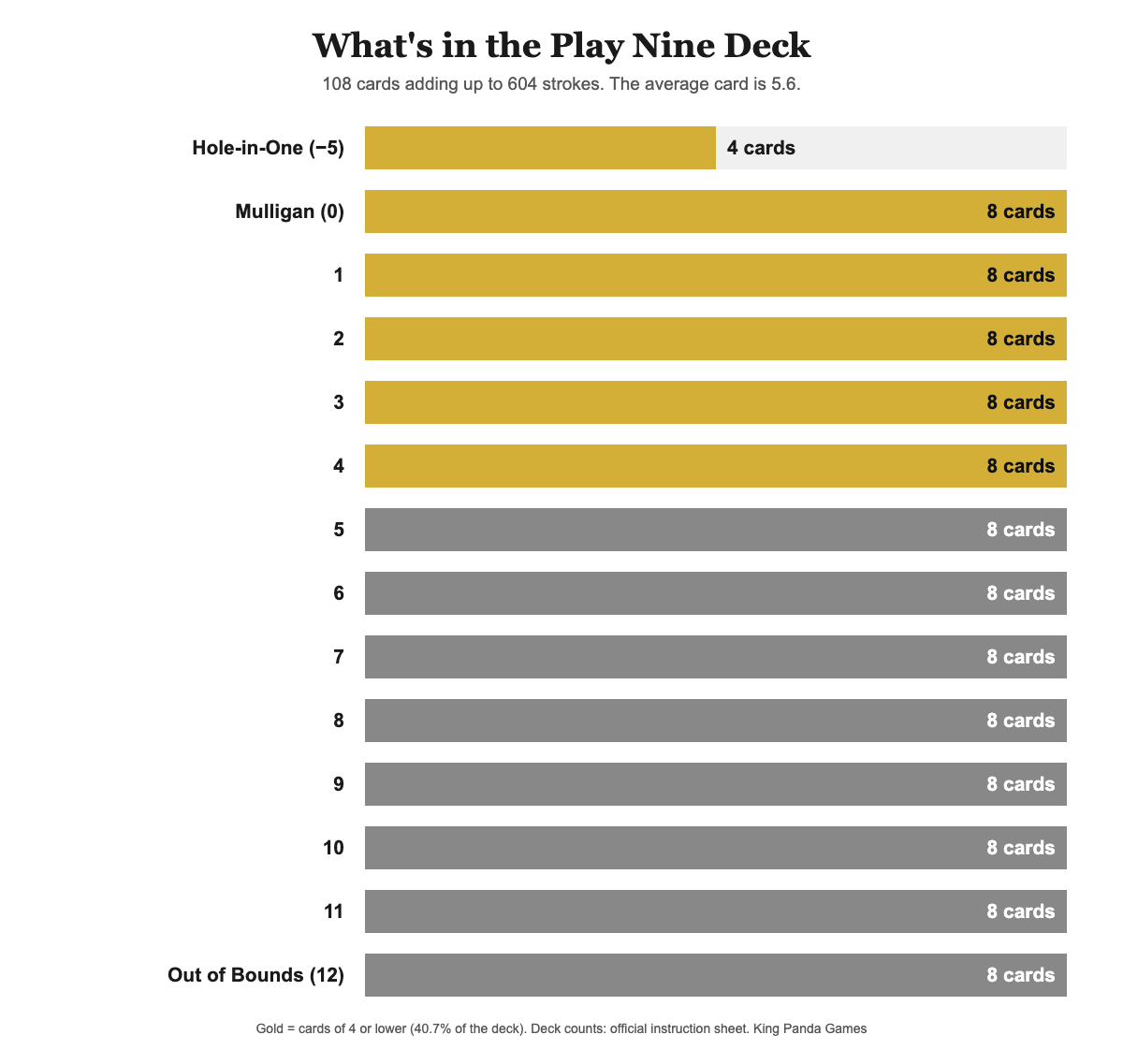
These figures assume a full, shuffled deck with none of the cards seen yet. In a real hole they shift as cards turn up.
The rule: treat every face-down card as a 5.6. Swap a drawn card for a face-up card when the drawn card is lower. Swap it for a face-down card when it’s 4 or lower.
Replace Your High Cards First
The fastest way to lower your score is to get rid of the worst card you can see. A 12 replaced by a 3 saves nine strokes. A face-down card replaced by the same 3 saves about 2.6 on average.
So when you draw a low card and you have a 9 or higher showing, the 9 goes. The exception is a high card that already has its match waiting in the same column.
Pairs Beat Low Cards
“Should you go for pairs in Play Nine?” Yes, especially with high cards. A matching pair in a column scores zero, whatever the number is.
The tempting play: you have a 12 showing and draw a 6. You swap the 12 out and feel good about saving six strokes.
The better play, if you hold the other 12: put the second 12 under the first. Two 12s in a column score zero. That’s 24 strokes gone, and it sets up a −10 bonus if you ever build a second column of 12s.
Pairing two 2s saves four strokes. Pairing two 11s saves twenty-two. The higher the card, the more a match is worth.
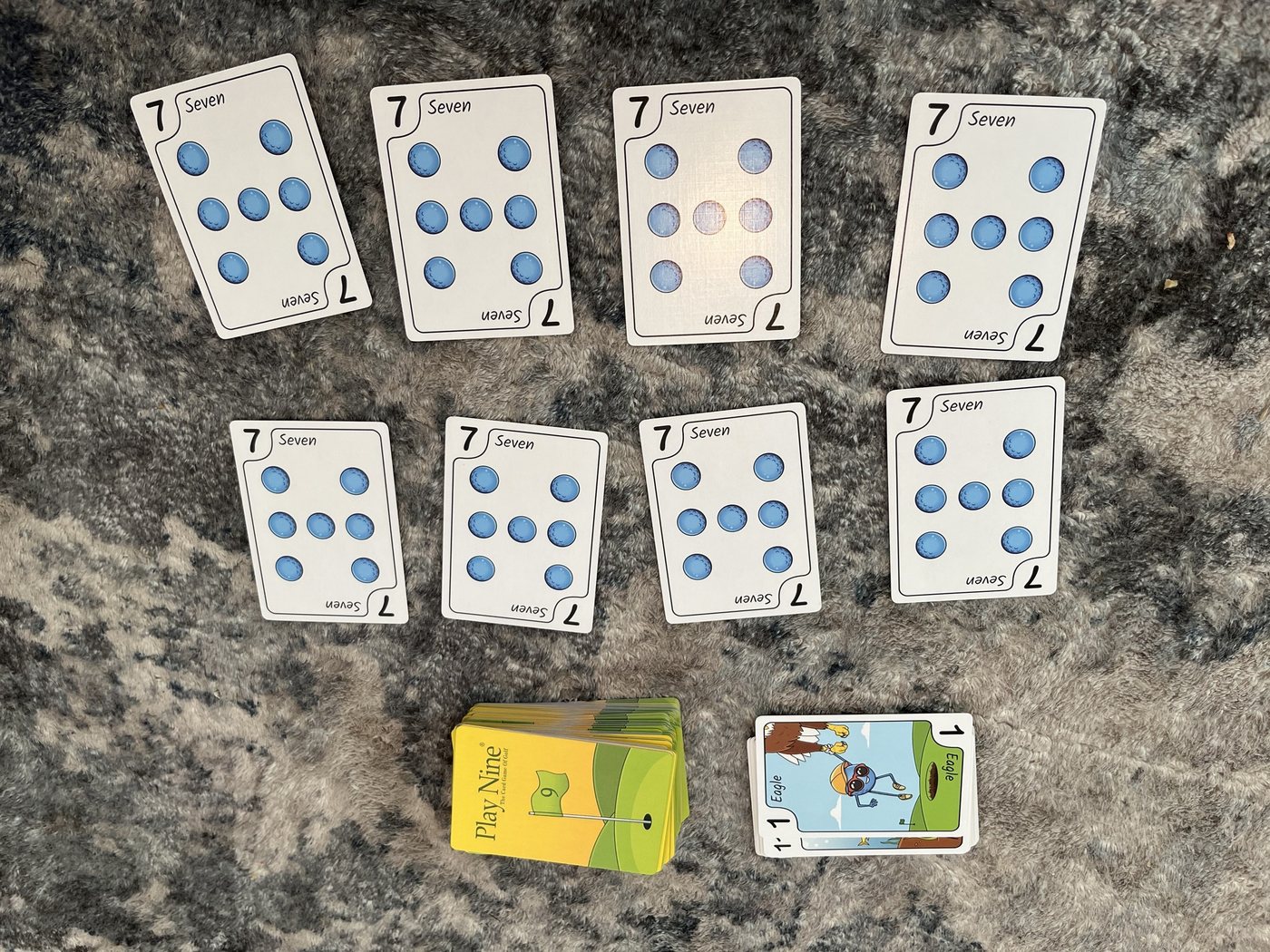
Don’t wait for a match that isn’t coming, though. There are eight copies of each number. If you can already see four or five of them face up around the table, the odds have dropped, and a low card is the safer swap.
Watch the Discard Pile
The discard pile is the only card you can see before you take it. The deck is a 5.6 on average. The discard is exactly what it says.
Take the discard when it completes a pair or when it’s 4 or lower. Otherwise draw from the deck.
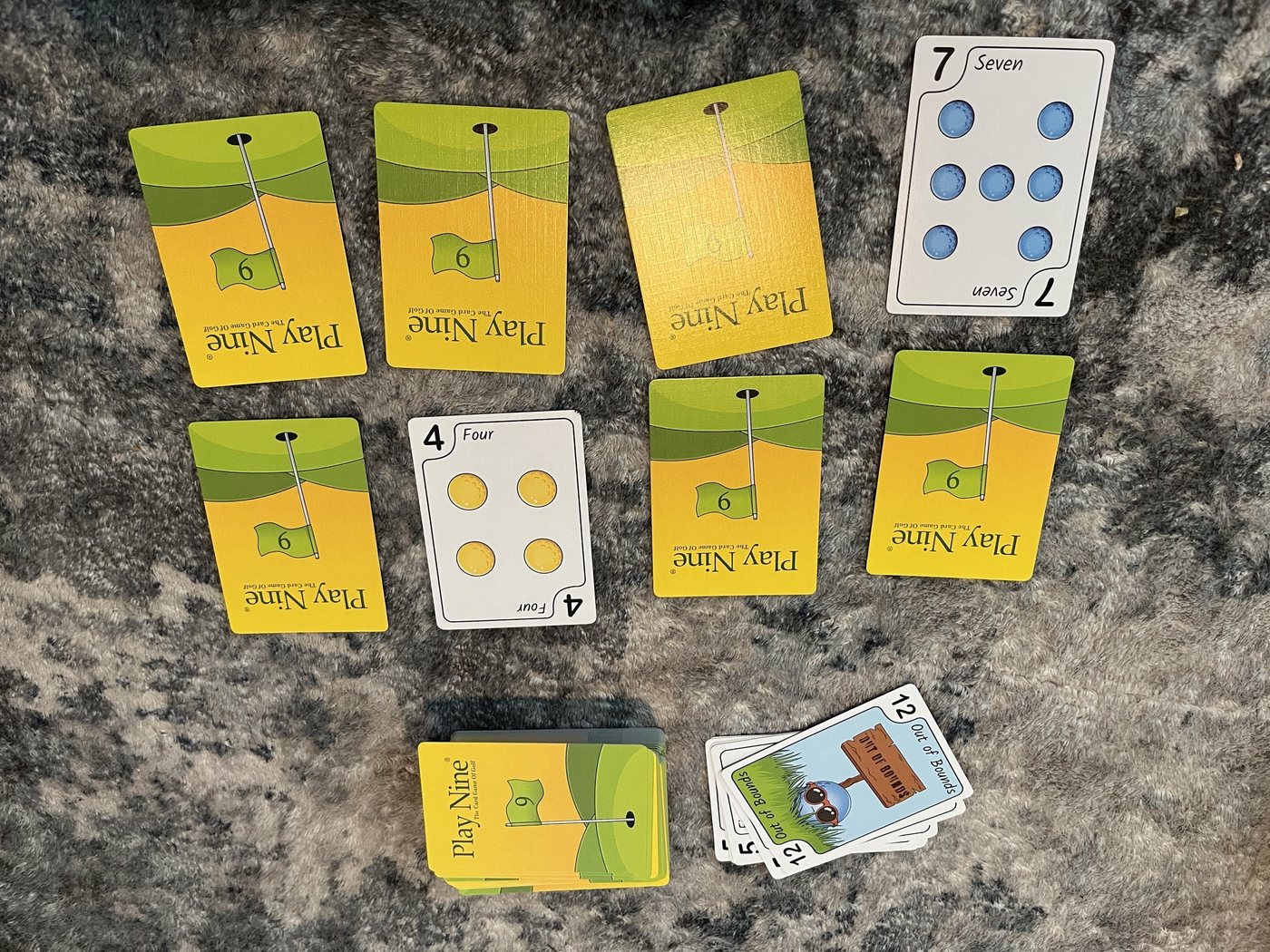
It works the other way too. The player after you can take whatever you throw away. If they have a 10 showing with a face-down card under it, don’t discard a 10.
When to End the Hole
Turning over your last card ends the hole for you and gives everyone else exactly one more turn. That’s a weapon when you’re ahead and a mistake when you’re not.
You have seven cards face up for 6 strokes and one card face down. The other players each still have three or four cards face down. Flip your last card now. Even if it’s a 12, you finish around 18, and they’re stuck counting unseen cards at about 5.6 each with one turn to fix them.
If your face-up cards are bad, use the rule that lets you wait. With one face-down card left, you can draw and discard without flipping it, turn after turn, until the card you need shows up.
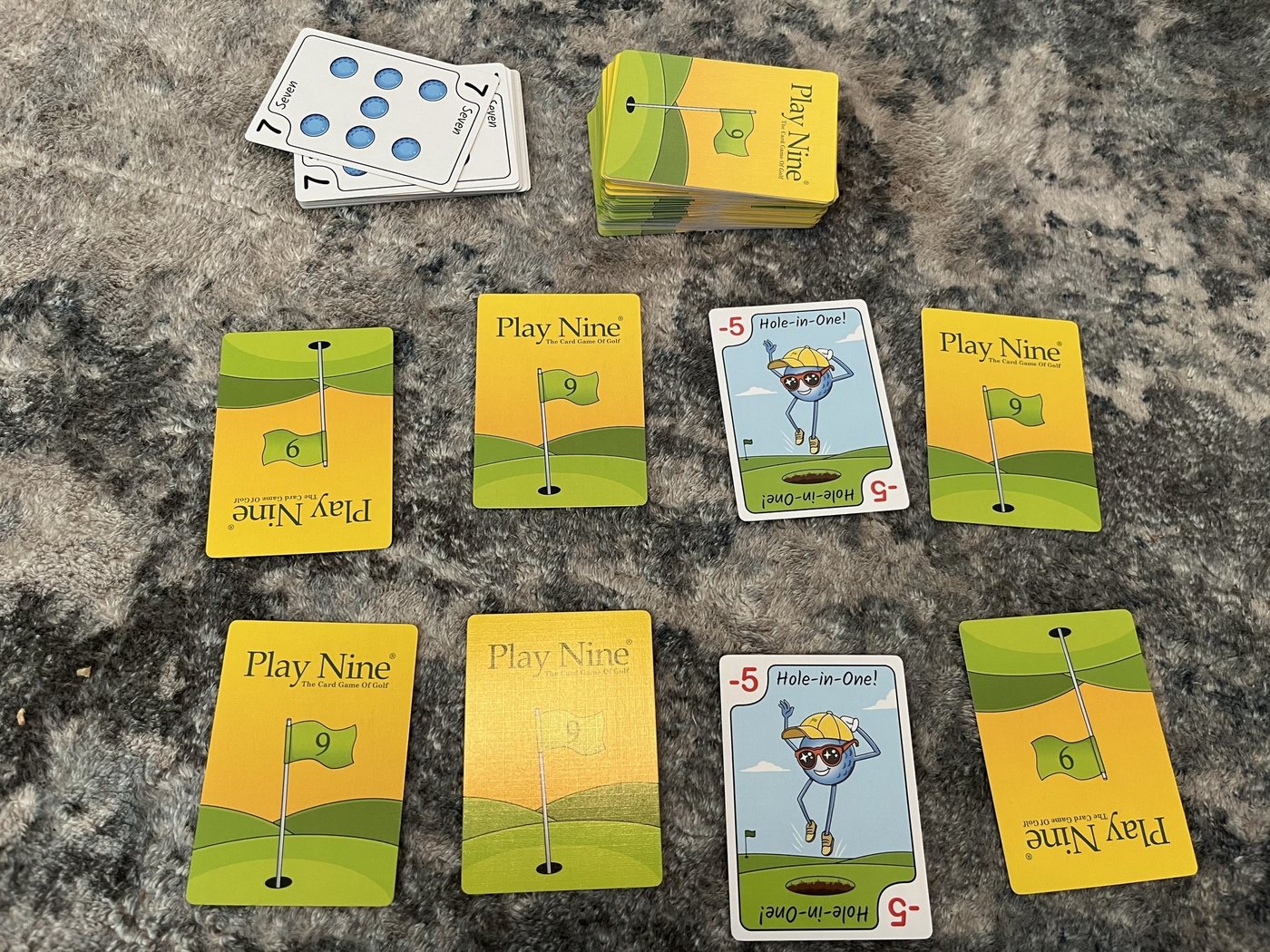
Worth knowing: two Hole-in-One cards in one column still score −10. They’re the only pair that doesn’t cancel to zero, so keep every one you get.
Think in Nine Holes
One bad hole doesn’t lose a nine-hole game. With an average unseen hand worth about 45 strokes, a single hole can swing a lot in either direction.
If you’re behind late, chase the bonuses: two matching columns are worth −10 on top of the zero. If you’re ahead, take low cards and end holes early.
If you don’t own a copy yet, the Play Nine deck is all you need. Our Play Nine review covers who it’s for, and Play Nine vs Skyjo compares the two.
Check Play Nine price on Amazon →
Frequently Asked Questions
What is the best strategy for Play Nine?
Replace your highest face-up cards first, build matching pairs in columns so they score zero, take the discard only when it’s 4 or lower or completes a pair, and end the hole early when you’re ahead.
What is the average card value in Play Nine?
About 5.6 strokes. The 108-card deck has eight each of 0 through 12 and four Hole-in-One cards at −5, which adds up to 604 strokes.
Should you keep a high card to try for a pair?
Only if you already hold its match or few copies have been seen. A pair of high cards scores zero, which saves the most strokes, but each number has only eight copies in the deck.
When should you turn over your last card in Play Nine?
When your score is low and other players still have several face-down cards. They get only one more turn. If your cards are poor, you can skip turns with one card left until a better card comes.
Is Play Nine luck or skill?
Both. The deal and the draws are luck. Choosing which card to replace, when to chase a pair and when to end the hole are decisions that add up over nine holes.
What is the lowest possible score on a hole in Play Nine?
Four Hole-in-One cards in two columns score −30. Four more matching cards in the other two columns add a −10 bonus, for −40.