

Bottom Line
Blood Rage is the best Viking war game for groups who want gorgeous miniatures, brutal player conflict, and a card draft that drives every decision. It’s built for people who like to fight over a map and don’t mind losing figures — because in Blood Rage, dying gloriously is a scoring strategy, not a setback. Skip it if your group hates direct conflict or wants a quiet optimization puzzle. The first game takes a round to click, but once it does, few games deliver this much drama in 90 minutes.
Blood Rage earns 5/5 Pandas and 3/5 Bamboo Plants from us — and the gap is the whole story. The rules are not hard, but the mindset is. Once your table understands that a glorious death scores glory, the game opens into one of the most thrilling area-control experiences on the table.
Some links below are Amazon affiliate links — as an Amazon Associate, King Panda Games earns from qualifying purchases at no extra cost to you. Full disclosure.
| Detail | Info |
|---|---|
| Players | 2–4 |
| Best Player Count | 4 — maximum conflict, minimal dead space |
| Age | 14+ |
| Play time | 60–90 min |
| Complexity | Medium |
| Solo Mode | No |
| Designer | Eric M. Lang |
| Publisher | CMON / Guillotine Games |
| Popular Upgrades | Yes — paint, figure trays, neoprene mat |
| Bamboo Plants | 3/5 — teaches in 30 min, mindset takes longer |
| Pandas | 5/5 — drama and table presence to spare |
| Official site | cmon.com |
How It Works
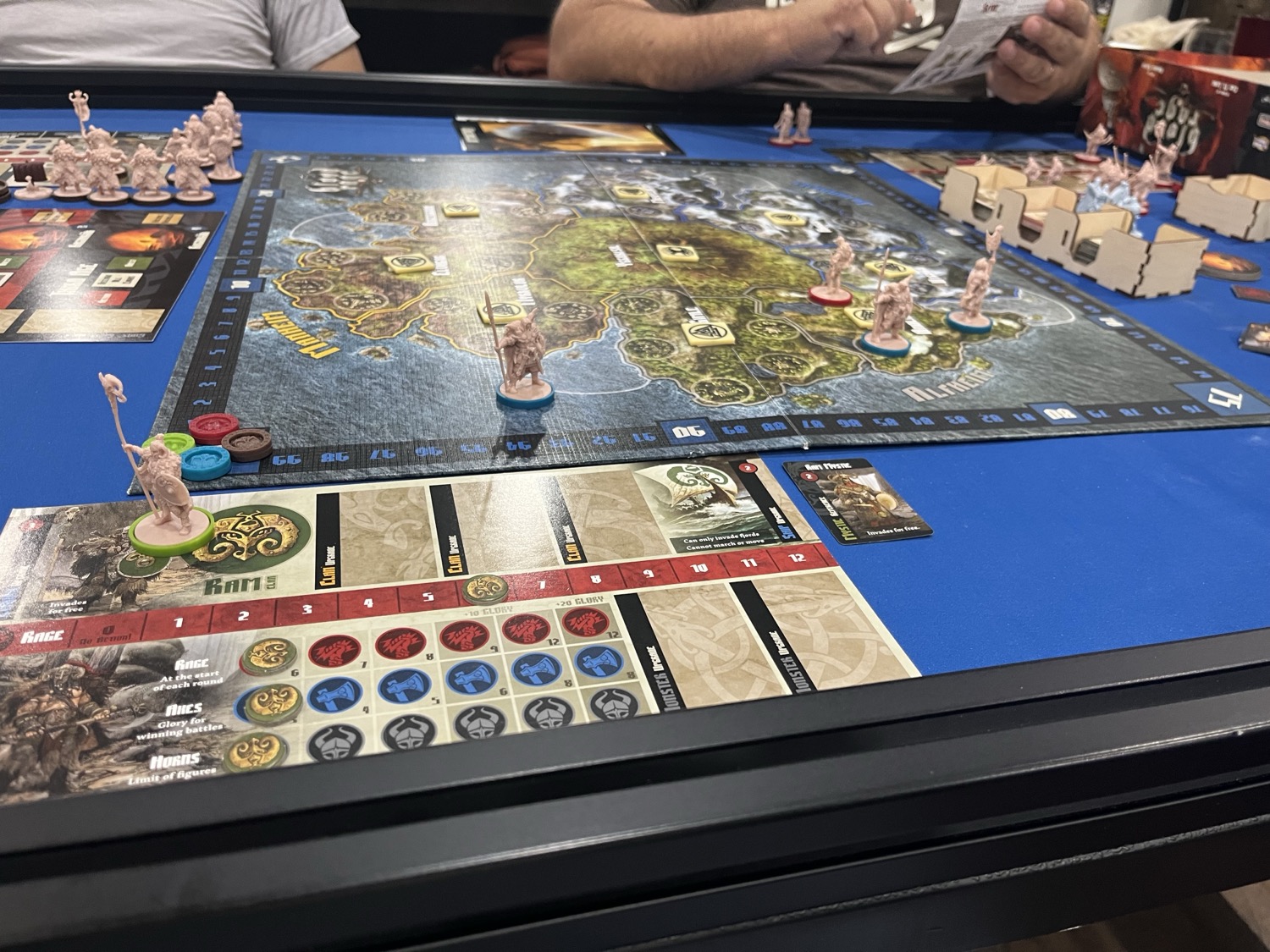
The retail box holds 46 miniatures — four clans of 8 warriors, 1 leader and 1 ship, plus 6 monsters.
Blood Rage is a Viking saga played out over three Ages, and the world is ending the whole time. Ragnarök is coming, and your job isn’t to survive it — it’s to earn the most Glory before the world burns. You score Glory by winning battles, pillaging provinces, completing quests for the gods, and, crucially, by dying valiantly when Ragnarök consumes the land beneath your warriors. It lands at #10 on our best board games of 2026 list.
Each Age starts with the Gods’ Gifts phase — a card draft. You take a hand of cards, keep one, and pass the rest, building a hand of upgrades, battle tricks, monsters, and quests that will define your strategy for the entire Age. This draft is the brain of the game. The cards you take don’t just help you; they deny your opponents the tools they wanted.
It’s the second Age. You draft a card that lets you recruit a Mountain Giant — a monster with brutal combat strength — and you can see the player to your left was eyeing it. You take it not just because it’s strong, but because their whole plan depended on it. Two turns later they march into a province expecting an easy pillage, and your giant is sitting there waiting. The battle isn’t close. That’s Blood Rage: every card is a weapon and a denial at the same time.
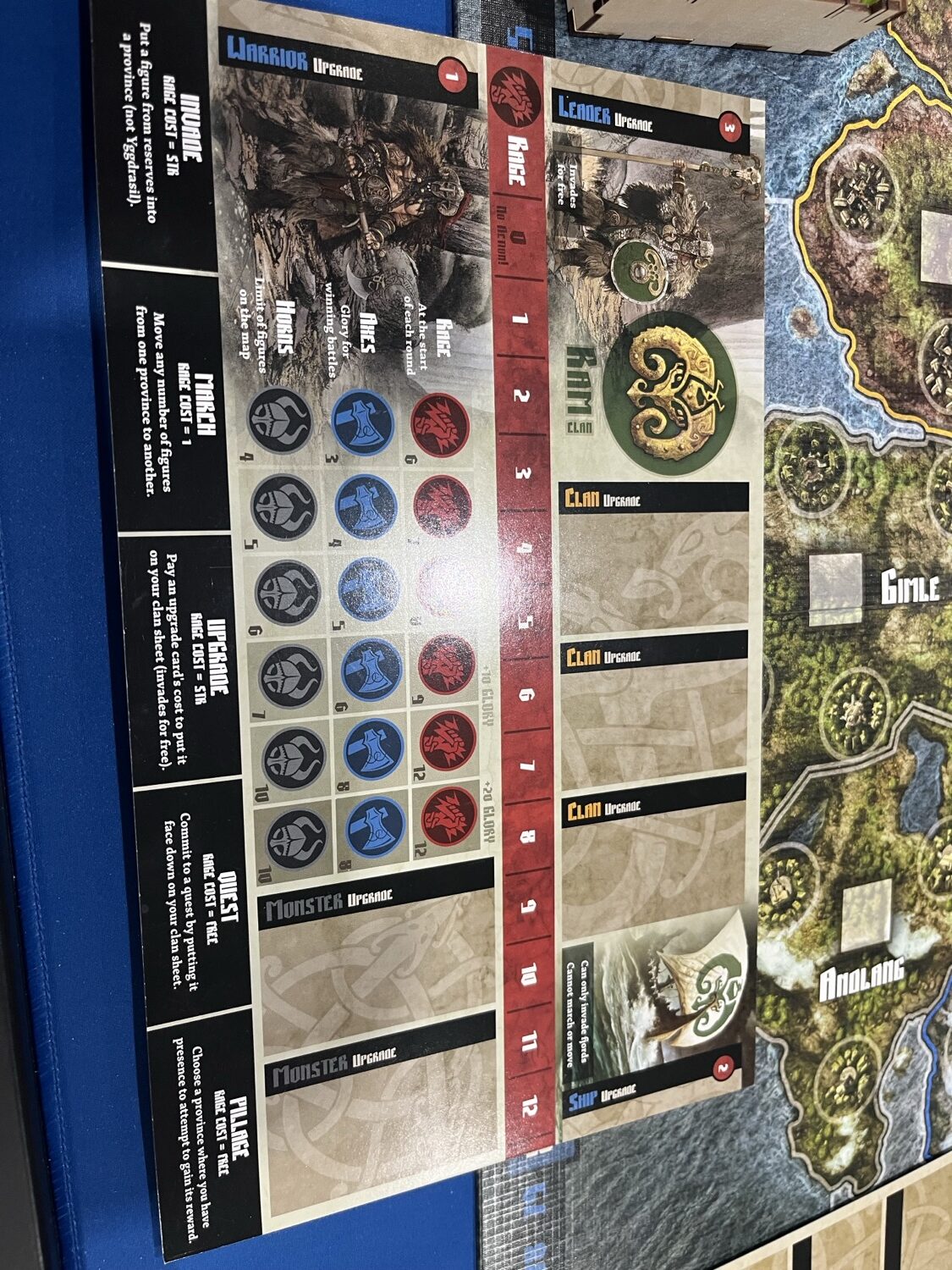
Your clan sheet tracks three stats. Rage is your action currency — it sets how many things you can do each Age. Axes determines how much Glory you earn for winning battles. Horns caps how many figures you can field. You spend Rage to Invade (drop warriors onto the map), March (move them), Upgrade (play powerful cards), Quest, and Pillage (attack a province for its rewards). When two clans want the same province, they fight — and combat is resolved by comparing strength plus a single face-down card each, played simultaneously. The card flip is where hearts break.
At the end of each Age, Ragnarök destroys an entire region of the board. Every figure standing there dies — and if you planned for it, those deaths pay you Glory. Then the next Age begins with a fresh, stronger deck of cards. After the third Age, the most Glory wins.
Pros
- The card draft makes every game feel different. Three decks of 33 cards, drafted fresh each Age, mean your strategy is shaped by what comes your way and what you deny others. No two games build the same engine.
- Combat is pure drama. Strength is visible, but each side plays one face-down card. The flip — a last-second trick, a strength boost, a “you lose but score anyway” Loki card — produces the loudest moments at the table. We had a battle yesterday swing entirely on a single card nobody saw coming.
- Losing is a real strategy. Most war games punish defeat. Blood Rage rewards a glorious death, which means a “losing” army can be your highest-scoring play. It completely rewires how you think about conflict, and it’s brilliant.
- The miniatures carry the table. Adrian Smith’s clan warriors, leaders, ships, and the towering monsters give Blood Rage enormous presence. Even unpainted, a four-clan game mid-Ragnarök looks like a battlefield.
- It ends before it overstays. Three Ages, 60–90 minutes, and a hard stop at Ragnarök. The pacing is tight — no runaway slog, no endless final turn.
Cons
- The first game is a mindset hurdle. New players instinctively protect their figures and avoid losing fights — exactly wrong. Until the table internalizes that dying scores Glory, the first Age can feel confusing. Watch a teach video or accept that game one is the tutorial.
- It demands a confrontational group. Blood Rage is about fighting over a map. If anyone at your table dislikes direct conflict, being attacked, or losing pieces, they will not enjoy this. There’s no hiding in your corner.
- Player count changes it a lot. At two players, the map opens up and the contested-territory tension drops. It’s still playable, but Blood Rage is built for the chaos of three or four clans crammed onto Yggdrasil.
Who It’s For
Blood Rage is built for players who want a war game with brains — who love drafting an engine, then watching it collide with everyone else’s on a shared map. If you enjoy bluffing in combat, planning two Ages ahead, and the theatrical swing of a single face-down card, this is a centerpiece game for your shelf.
It’s also a fantastic gateway into the “dudes on a map” genre. The rules are lighter than they look, the theme is instantly gripping, and the miniatures pull in people who’d never normally try an area-control game. We’ve used it to convert Catan players into something heavier.
Who should skip this game. Conflict-averse groups, full stop — Blood Rage is nothing but conflict. Players who want a solo mode (there isn’t one), who need a quiet optimization puzzle, or who get genuinely frustrated losing pieces will not have a good time. And if your group can’t handle a kingmaking moment — where a losing player decides who wins by who they attack — the politics will sting.
Who Should Buy This?
Buy Blood Rage if you want a premium, miniatures-driven war game that plays in under 90 minutes and never feels samey. At its typical $60–90 price, you’re paying for a mountain of quality plastic, gorgeous art, and a card system with enormous replay value — and it earns that price for a group that fights.
If you’re unsure whether your table likes direct conflict, play someone else’s copy first. Blood Rage is a poor blind buy for a conflict-averse group and an easy purchase for one that already loves area control or Eric Lang’s other games. For most groups who enjoy a good fight, it becomes a permanent collection staple.
Check Blood Rage price on Amazon →
Best Player Count
Four players. Blood Rage is designed for a crowded map, and four clans is where it sings.
With four, every province is contested, Ragnarök’s destruction matters to everyone, and the card draft is at its most cutthroat because more players means more cards you want are getting sniped. The board feels appropriately apocalyptic.
At three, it’s still excellent — slightly more breathing room, a touch less constant friction, but the core tension holds. At two, the map simply has too much space; you can avoid each other in a way the game isn’t built for. It works at two, and we cover exactly how it changes in our Blood Rage 2-player guide, but four is the definitive experience.
Replayability
Blood Rage’s replay value lives in its card decks. Three Ages, each with its own 33-card deck drafted fresh, mean your available strategies shift every single Age of every single game. One game you’re building a monster army; the next you’re drafting Loki cards to weaponize your own defeats.
The shifting Ragnarök predictions add another layer. Each Age, the region that will be destroyed changes, which rewrites where it’s safe to commit forces and where a glorious death is waiting to be farmed. You’re never running the same map twice.
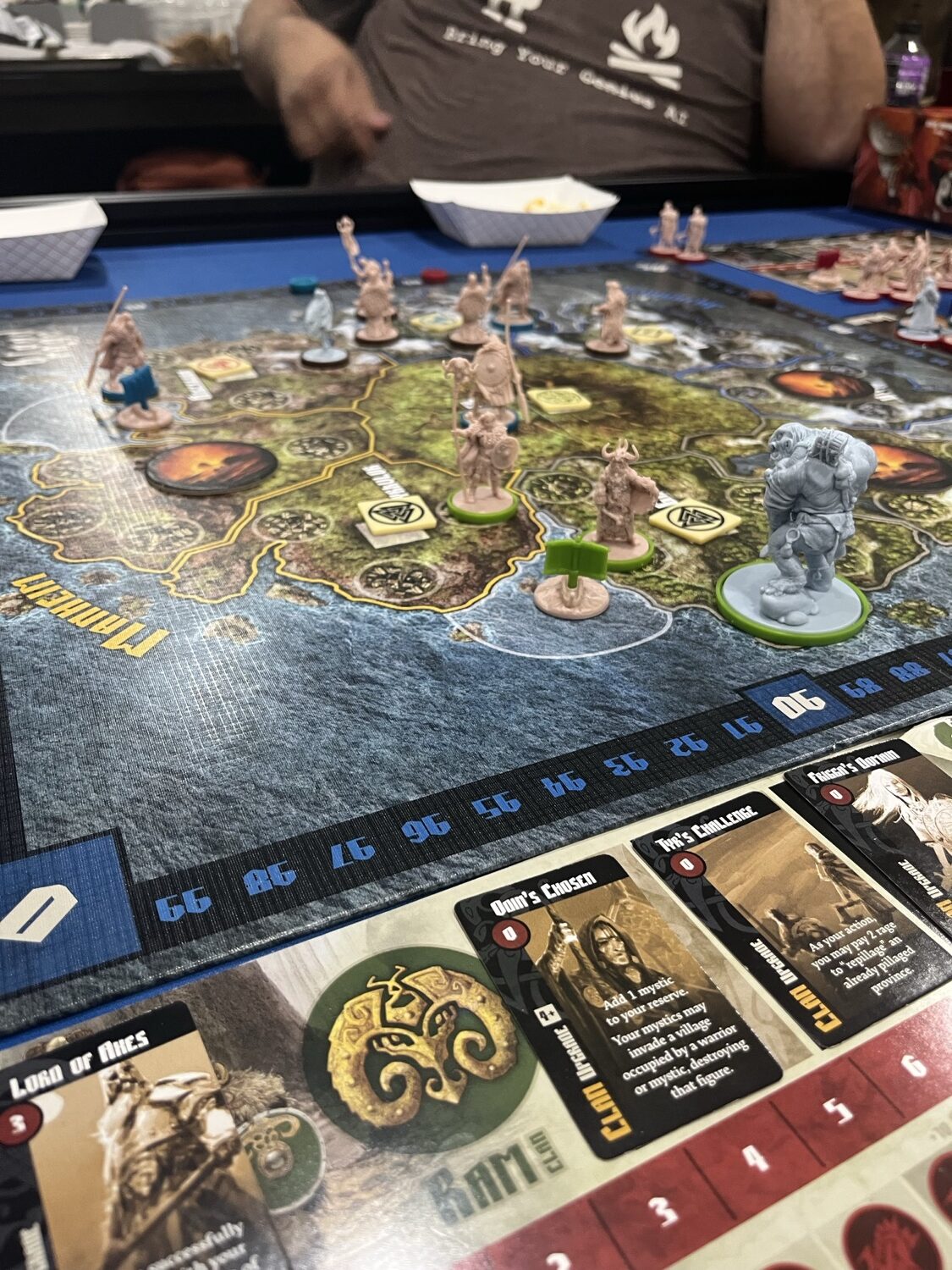
Expansions deepen this considerably — new gods, mystics, and a fifth player each change the draft and the board. We rank them all in our Blood Rage expansions guide, but the base game alone holds up for dozens of plays.
Accessories and Upgrades
Blood Rage has a thriving upgrade scene, and a couple of pieces genuinely improve the experience.
Paint is the obvious one. The miniatures are detailed enough to reward it, and a painted four-clan set on the table is genuinely jaw-dropping. Not necessary — we played a great session with bare figures — but no other upgrade transforms the table presence more. Blood Rage tops our ranking of board games with miniatures worth painting, largely because four colour-coded clans give you a scheme before you open a pot of paint.
Figure trays or a foam insert make setup and teardown dramatically faster. Blood Rage has a lot of plastic across four clans plus monsters, and laser-cut clan trays (we used a custom set) keep each clan’s warriors, leader, and ship sorted so setup takes two minutes instead of ten.
A neoprene mat for the board is purely cosmetic but adds a premium feel and keeps figures from sliding during a heated province grab. Nice to have, not needed.
Check a miniature paint set price on Amazon →
Awards
Blood Rage made the 2016 Kennerspiel des Jahres recommended list — the German connoisseurs’ game-of-the-year, where “recommended” sits alongside the nominee shortlist rather than on it — and picked up 2015 Golden Geek nominations for Best Thematic, Best Strategy and Best Artwork. It has remained one of the most beloved miniatures war games since its 2015 release, regularly appearing on “best dudes on a map” and best Eric Lang lists.
It is not universally loved. Shut Up & Sit Down declined to recommend it, arguing the card draft does the real work while the board does less than the miniatures promise — worth reading before you buy, because it is the sharpest version of the case against this game.
Similar Games
If you like 7 Wonders Duel, try Blood Rage — both live and die on drafting, but Blood Rage takes the drafted engine and smashes it against other players on a shared map. The drafting brain is similar; the payoff is a brawl instead of a tableau. Read our 7 Wonders Duel review.
If you like Spirit Island, try Blood Rage — they’re tonal opposites (Spirit Island is cooperative and cerebral; Blood Rage is competitive and vicious), but both reward players who plan several turns ahead and read the whole board. If you can handle Spirit Island’s depth, Blood Rage’s will feel approachable. Read our Spirit Island guide.
If you like Rising Sun, you already know the DNA — Rising Sun is Eric Lang’s spiritual successor to Blood Rage, swapping Norse for feudal Japan and adding negotiation. We compare them directly in our Blood Rage vs Rising Sun breakdown.
Tips for Your First Few Games
Stop protecting your figures. This is the single hardest habit to break. In Blood Rage, a warrior who dies in battle or in Ragnarök often scores you Glory. New players hoard and defend; winners spend their figures like currency. Throw them into the fight.
Draft to deny, not just to build. The card you take is a card your opponent can’t have. Watch what the player passing to you clearly wanted, and consider taking it even if it’s only decent for you — Blood Rage is as much about strangling enemy plans as building your own.
Worth knowing: Pay attention to the Ragnarök prediction each Age. The region marked for destruction is where you want figures you’re willing to sacrifice for Glory — and where your opponents will get punished if they over-commit. Plan your deaths in advance.
Commit to a strategy early in each Age’s draft. Blood Rage rewards a focused plan — a monster army, a quest engine, a Loki loss-farming build — far more than a scattered hand. Pick a direction in the first few drafted cards and lean into it hard.
Watch your Rage, not just your figures. Rage is your action economy. Running out of Rage mid-Age with plans unfulfilled is the most common beginner mistake. Budget it like the scarce resource it is, and don’t blow it all on Invades in the first two turns.
Not sure whether Blood Rage is the right step for your group? It is number 9 of 12 on our strategy board games list, ranked easiest to hardest to learn.
Frequently Asked Questions
Is Blood Rage worth buying?
Yes — if your group enjoys direct conflict. Blood Rage delivers gorgeous miniatures, a deep card draft, and some of the most dramatic combat in any board game, all in under 90 minutes. At $60–90 it’s a premium price, but the component quality and replay value justify it for a table that likes to fight. Conflict-averse groups should skip it.
Is Blood Rage hard to learn?
The rules are medium-weight and teach in about 30 minutes. The harder part is the mindset — Blood Rage rewards losing battles and sacrificing figures, which feels deeply counterintuitive at first. Most groups find the rules click in game one and the strategy clicks in game two.
How long does a game of Blood Rage take?
Between 60 and 90 minutes for most groups. It runs three Ages with a hard stop at the final Ragnarök, so it doesn’t drag — experienced players can finish a four-player game comfortably inside 90 minutes.
Why do you score points for losing in Blood Rage?
Glory in Blood Rage comes from dying valiantly, not just winning. A figure that dies in battle or when Ragnarök destroys its province can score Glory, especially with the right cards. This “losing is winning” design is the game’s signature hook and the foundation of the famous Loki strategy.
Is Blood Rage good for 2 players?
It’s playable but not at its best. With only two clans, the map has too much open space and the constant territorial conflict the game is built around loosens. Blood Rage shines at four players. We cover the 2-player experience in detail in our dedicated guide.
What is the difference between Blood Rage and Rising Sun?
Both are Eric Lang miniatures war games with drafting and combat, but Rising Sun adds negotiation and alliances and uses a feudal Japan theme, while Blood Rage is pure Norse conflict with no formal diplomacy. Blood Rage is leaner and more aggressive; Rising Sun is more political. Many fans own both.
Does Blood Rage have a solo mode?
No. The base game is competitive only, designed for 2–4 players, with no official solo variant. Its entire design is built around player-versus-player conflict over a shared map, so it doesn’t translate to solo play.
How many miniatures come in Blood Rage?
The base game includes four clans of ten figures each (eight warriors, one leader, one ship) plus six monster figures — 46 miniatures in total. They’re highly detailed and a popular target for hobby painting.
Want to Go Deeper?
- How to Win at Blood Rage — the full strategy guide covering Rage economy, draft priorities, and when to fight. Read it here
- The Blood Rage Drafting Guide — the single most important skill in the game, broken down pick by pick. Read it here
- The Loki Strategy in Blood Rage — how to weaponize your own defeats and win by losing. Read it here
- Blood Rage vs Rising Sun — which Eric Lang epic belongs on your shelf. Read it here
- Is Blood Rage Good at 2 Players? — how the game changes with only two clans, and how to make it work. Read it here
- Blood Rage Expansions Ranked — Gods of Asgard, Mystics of Midgard, and the 5th Player, ranked by what’s actually worth it. Read it here
Verdict
Buy it if you want a fast, gorgeous, vicious war game that rewards bold play and punishes timidity — and if your group can take a punch and throw one back. Blood Rage is one of the best dudes-on-a-map games ever made, and the “losing is winning” hook keeps it fresh for years. Skip it if anyone at your table dislikes direct conflict or wants a solo or low-interaction experience. Try before you buy if you’ve never played an area-control war game — borrow a copy, lose your first game, and see if the drama grabs you the way it grabbed us.
Official site: cmon.com